
Drone Attacks Hit Strategic Oil Sites
Ukraine has launched a series of strikes on major Russian oil facilities, causing large fires and serious damage. Satellite images confirm that several key locations were hit over the past week.
The attacks targeted oil infrastructure in the Leningrad region, an area close to the Baltic Sea. Important export hubs, including Ust-Luga and Primorsk, were affected. The Kirishi oil refinery also suffered heavy damage.
Fires Continue After Repeated Strikes
Ukraine’s drone commander, Robert Brovdi, said forces struck Ust-Luga again to keep the fire burning. His statement suggests a strategy to disrupt operations for a longer period.
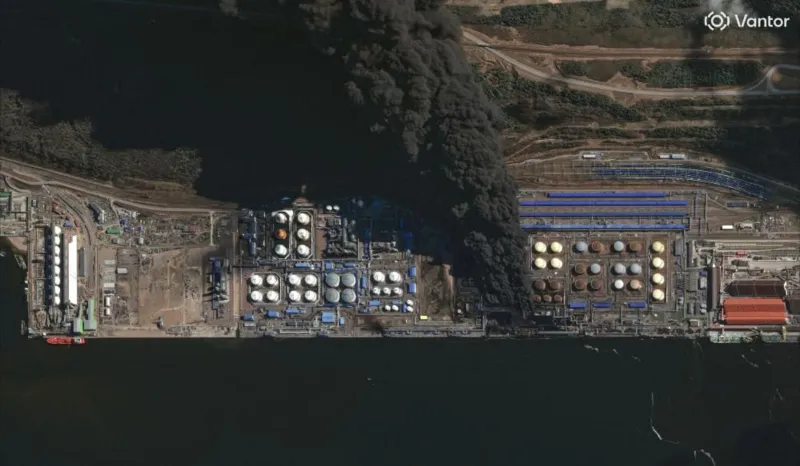
Satellite images show thick smoke rising from Primorsk on 24 March. Fires also continued at Ust-Luga, while Kirishi showed clear signs of destruction by 27 March.
Injuries Reported and Drones Intercepted
Local authorities reported casualties after the attacks. Alexander Drozdenko confirmed that three people were injured, including two children.
He also said that air defense systems shot down 38 drones during the incident. Despite this, several strikes still hit their targets.
Major Impact on Russia’s Oil Exports
These ports play a key role in Russia’s oil trade. The Centre for Research on Energy and Clean Air reports that Ust-Luga handles about 20% of Russia’s oil exports. Primorsk accounts for around 22%.
New shipping data shows a rare disruption. No oil tankers loaded at Russia’s Baltic ports on 26 and 27 March. This marks the first two-day توقف since the Russian invasion of Ukraine began.
Growing Pressure on Energy Infrastructure
The continued attacks highlight Ukraine’s focus on weakening Russia’s energy sector. By targeting export hubs, these strikes can affect supply chains and revenue.
The situation remains tense, with fires still burning and damage assessments ongoing.