
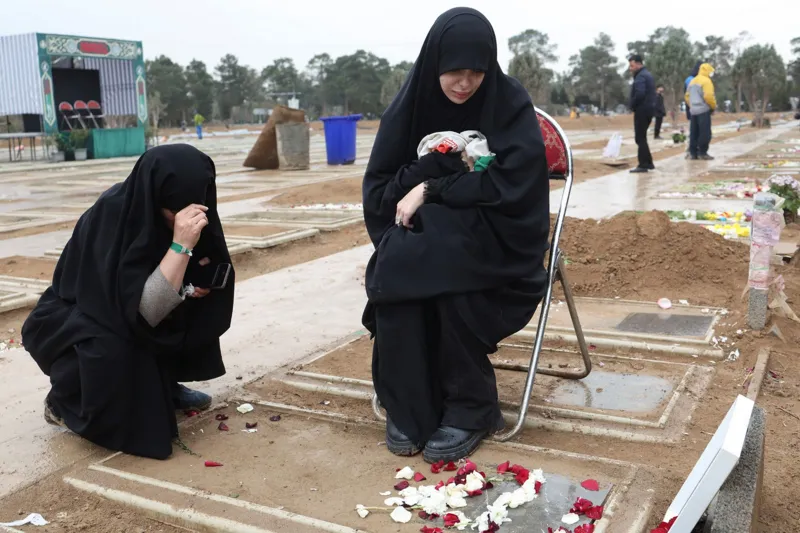
The conflict between the US and Iran has already claimed thousands of lives. According to HRANA, a US-based rights group, around 3,291 people have died in Iran, including 1,455 civilians.
US President Donald Trump has claimed that Washington is negotiating an end to the war. Tehran, however, insists that no official talks are taking place. Iran’s Foreign Minister Abbas Araghchi confirmed that messages were exchanged through intermediaries, but called them “neither dialogue nor negotiation.” Trump argues that Iran fears admitting talks due to internal political risks.
The reality seems to be that both sides remain far apart, echoing the stalemate seen in the Russia-Ukraine conflict. Both claim they want peace, but neither is willing to compromise on key demands.
What the US and Israel Want
When the war began on February 28, the US and Israel hoped that Iran’s weaker economy and military would collapse under pressure. They expected the Islamic Republic to sue for peace.
So far, this has not happened. The US and Israel’s 15-point plan, reported by Israel’s Channel 12, includes:
- Ending Iran’s nuclear program
- Halting its ballistic missile program
- Stopping support for proxy militias like Hezbollah in Lebanon and the Houthis in Yemen
In exchange, Iran would receive sanctions relief and limited control over the Strait of Hormuz.
Iran’s Position
Iran rejected the 15-point plan, calling it excessive. Araghchi later said that “some ideas” have been proposed to senior leaders, but no decision has been made. State media lists five conditions for ending the war:
- Payment of war reparations
- International recognition of Iran’s authority over the Strait of Hormuz
- A guarantee against future attacks
Iran sees itself as the region’s dominant power, aiming to restore the influence it held under the shah before the 1979 Islamic Revolution. It wants the US 5th Fleet to leave the Gulf, asserting military dominance with support from Russia, China, and North Korea. Iran also distrusts the US, recalling previous talks in 2025 and February this year that ended with US military action.
Gulf Arab States’ Concerns
Gulf Arab countries are alarmed. They had tolerated Iran under an uneasy truce, but the conflict has left them vulnerable. Iran now controls key parts of the Gulf, including the Strait of Hormuz, giving it leverage over global energy markets.
The US has sent around 5,000 Marines and paratroopers from the 82nd Airborne Division to the region. They could be deployed at strategic locations, but a ground operation carries high risks, including US casualties and deeper entanglement in a war many consider avoidable.
Iran’s position is firm. The regime believes time and geography favor it. The more the White House pressures Iran for a deal, the less likely Tehran is to compromise.