
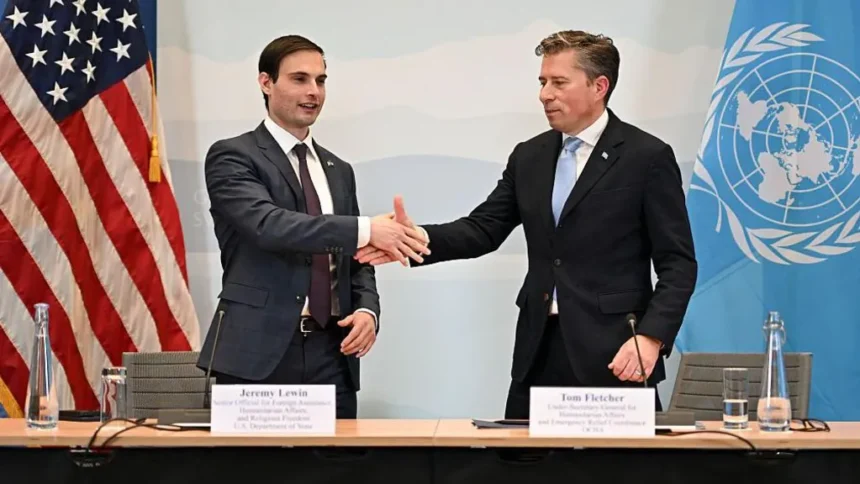
The United States has pledged $2 billion (£1.5 billion) to fund United Nations humanitarian programs. However, it warned the UN it must “adapt or die.”
Jeremy Lewin, President Trump’s Under Secretary for Foreign Assistance, announced the funding in Geneva alongside UN emergency relief chief Tom Fletcher.
Funding Cuts and Context
The pledge comes amid large cuts in US funding for humanitarian operations. Additional cuts are expected from other donors, including the UK and Germany.
Tom Fletcher welcomed the funds, saying they will save “millions of lives.” Still, $2 billion is a fraction of what the US has traditionally spent. In 2022, it contributed an estimated $17 billion (£12.6 billion) to UN humanitarian efforts.
Conditions on the Funding
The new US funds come with strings attached. The money will prioritize just 17 countries, including Haiti, Syria, and Sudan. Afghanistan and Yemen will not receive any funds. Lewin said Washington has evidence that UN funds in Afghanistan were diverted to the Taliban. He added, “President Trump will never tolerate a penny of taxpayers’ money going to terrorist groups.”
These restrictions make it difficult for aid agencies working in excluded countries. Funding cuts have already forced the closure of mother and baby clinics in Afghanistan and reduced food rations for displaced people in Sudan. Child mortality, which had been declining globally, is expected to rise this year.
Exclusions and Priorities
The US funding also prohibits spending on climate change projects. Lewin stated these efforts are not “life-saving” and not in “the US interest.”
Lewin, who reportedly played a key role in the USAID shutdown and staff layoffs, warned the UN to “adapt or die.” He emphasized that US aid must be focused, efficient, and avoid duplication.
Challenges for the UN
Tom Fletcher and other UN officials support efficiency and focus. Misused funds hurt people caught up in crises. Yet, the strict conditions raise questions about politicizing humanitarian aid. Neutrality, impartiality, and directing aid to those most in need are core principles. Excluding countries or crises like climate change challenge these principles.
Still, amid ongoing funding shortages and a cautious donor in Washington, many UN officials will acknowledge that $2 billion is better than nothing.