
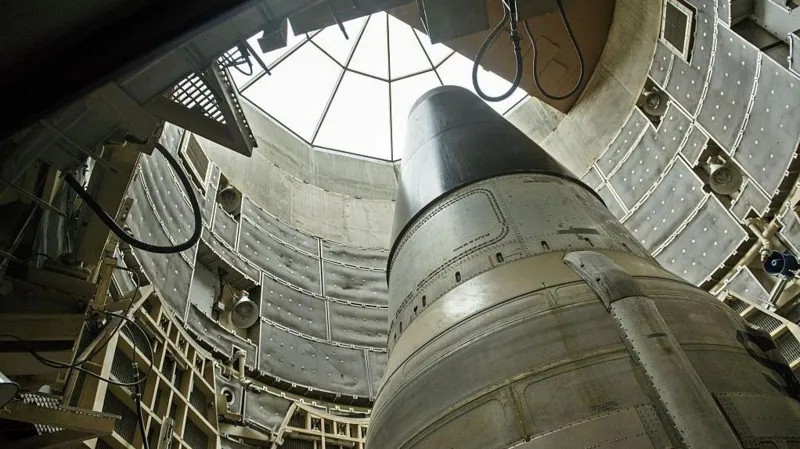
US-Russia Nuclear Treaty Nears Expiry
The last major nuclear weapons control treaty between the US and Russia, known as New START, is set to expire this Thursday. Signed in 2010, the treaty limited both nations to 1,550 deployed strategic nuclear warheads. It also included transparency measures, such as data exchanges, notifications, and on-site inspections.
Its expiration marks the end of a key framework that has helped prevent nuclear escalation since the Cold War. Pope Leo urged both countries to renew the agreement, emphasizing that the current global climate requires “doing everything possible to avert a new arms race.”
A History of Arms Control
The original START treaty, signed in 1991 between the US and the Soviet Union, capped each side at 6,000 nuclear warheads. New START followed in 2010 in Prague after the Soviet Union dissolved, continuing efforts to monitor and limit nuclear arsenals.
Despite a technical suspension three years ago, both countries appeared to adhere to the treaty’s limits. It prevented uncontrolled nuclear buildup while giving the largest nuclear powers transparency to avoid misjudging each other’s intentions.
Other Arms Control Treaties Have Collapsed
New START’s expiration follows a worrying trend. Several other major arms control agreements are already defunct:
- Intermediate-Range Nuclear Forces Treaty – eliminated many short-range nuclear weapons in Europe.
- Open Skies Treaty – allowed reconnaissance flights over each other’s territories.
- Conventional Armed Forces in Europe Treaty – capped tanks, troops, and artillery in Europe.
Britain’s former armed forces chief, Admiral Sir Tony Radakin, warned that the collapse of these treaties “risks unravelling” global security frameworks.
Nuclear Modernization and Escalation
Both Russia and the US are modernizing their nuclear forces. Russia is developing weapons like Poseidon, a nuclear-powered undersea torpedo, and Burevestnik, a nuclear-powered cruise missile. The US plans missile defenses like the “Golden Dome.” Meanwhile, all three major powers, including China, are working on hypersonic missiles that can travel faster than 4,000 mph.
Experts warn that these developments make it harder to reach a new arms control deal. Darya Dolzikova from RUSI notes that the growing reliance on nuclear weapons as a deterrent increases the risk of a new arms race.