
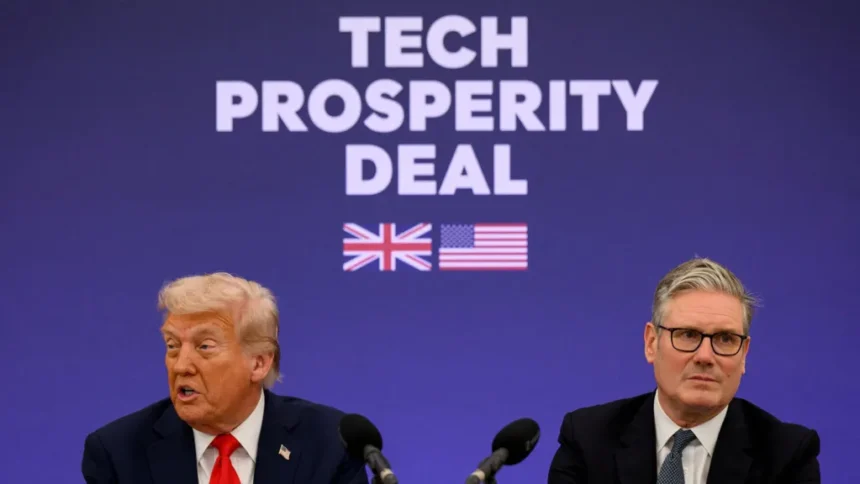
Talks between the United States and the United Kingdom over a major technology agreement have stalled, as wider trade disputes continue to block progress.
The Technology Prosperity Deal, announced in September, aimed to strengthen cooperation in areas such as artificial intelligence and emerging technologies. UK officials described the deal as a major step forward in economic and technological ties. Since then, negotiators have paused discussions after the US raised concerns about broader UK trade policies.
A UK government spokesperson said the relationship between the two countries remains strong and confirmed that the government remains committed to delivering benefits through the technology partnership. Officials, however, have not addressed specific points of disagreement.
The delay is linked closely to unresolved trade issues beyond technology. Differences over regulatory standards and market access have slowed talks. Despite this, major US tech firms still plan to move forward with their announced investments in the UK.
When leaders unveiled the deal, the UK government promoted it as a major boost for the domestic tech sector. Prime Minister Sir Keir Starmer said the agreement would shape future opportunities for millions of people. Technology Secretary Liz Kendall said the partnership showed global confidence in Britain’s AI industry.
At the same time, US technology companies announced significant investment plans. Microsoft, Nvidia, and Google committed a combined £31 billion to expand operations in the UK. These investments focus on building AI infrastructure, including new data centres.
The agreement itself takes the form of a Memorandum of Understanding. It outlines cooperation in artificial intelligence, quantum computing, and advanced nuclear technology. The document makes clear that the proposals carry no legal force and depend on progress in a broader US-UK Economic Prosperity Deal signed earlier this year.
Trade talks between the two countries have followed a sector-by-sector approach. Negotiators have reached agreements on automotive trade and pharmaceuticals. Talks on removing tariffs on UK steel exports, however, remain on hold.
Trade analysts say this situation reflects a fragmented negotiation strategy. Instead of finalising a single comprehensive deal, negotiators link separate sectors to different discussions. Experts believe this pause represents a tactical move rather than a long-term breakdown in relations.
For now, the technology deal remains stalled while both sides continue wider trade negotiations.