
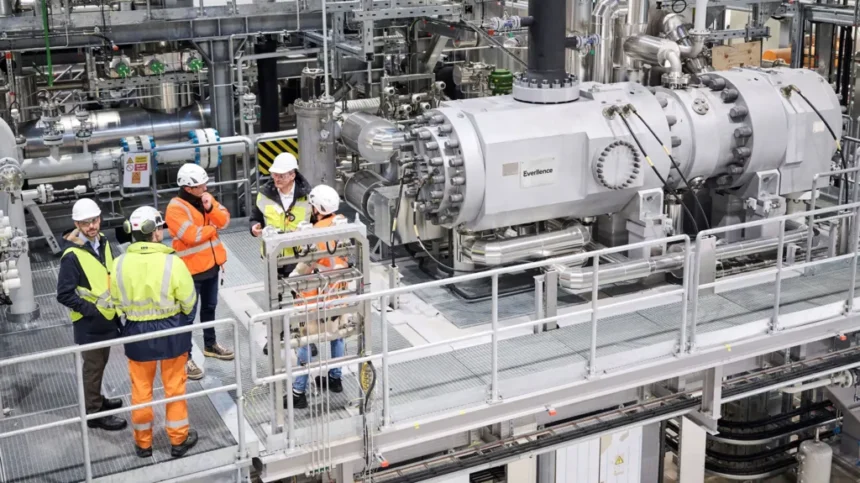
Some of the largest heat pumps ever built are now taking shape in Europe, and their scale is hard to picture. In Mannheim, Germany, engineers plan to pull water from the River Rhine through pipes so wide a person could walk through them upright. These pipes will feed a massive heat pump system designed to warm tens of thousands of homes.
The project is led by MVV Energie, which plans to install two heat pump units, each with a capacity of 82.5 megawatts. Together, they will supply heat to around 40,000 homes through a district heating network.
Moving machinery this large through city streets is difficult, so engineers are also considering shipping components along the Rhine. Either way, the goal is scale without disruption.
Heat pumps work by absorbing heat from their surroundings, such as air, ground, or water. Refrigerants inside the system warm and evaporate, then compression boosts that heat to usable levels. The same principle applies to home heat pumps, but city-scale systems operate at an entirely different magnitude.
As cities push to cut carbon emissions, large heat pumps are becoming a core part of district heating systems.
The Mannheim project will draw about 10,000 litres of river water per second, return it after extracting heat, and use filters to protect wildlife. Modelling suggests the system will raise the river’s average temperature by less than 0.1 degrees Celsius. Construction is expected to begin next year, with full operation planned for the winter of 2028 to 2029. The total cost is estimated at €200 million.
Other cities are going even bigger. In Aalborg, Denmark, a new heat pump system with a capacity of 176 megawatts is under development. It will meet nearly one-third of the city’s heating demand and is due to come online in 2027. Large hot water storage tanks will allow operators to store heat when electricity is cheap and use it later when prices rise.
Finland is also moving fast. Helsinki is overhauling its district heating network, which already connects almost 90 percent of the city’s buildings. While heat pumps play a major role, the city has also installed electric boilers. These are less efficient but cheaper to install and help balance the electricity grid when renewable power is abundant.
The UK has not yet matched the scale seen in Germany or Denmark, but progress is starting. Projects like the Exeter Energy Network and mine water heat systems show how district heating and large heat pumps could expand, especially in post industrial areas with space for infrastructure.
Together, these projects show how heat pumps are shifting from household appliances to city-wide engines of clean heat.