
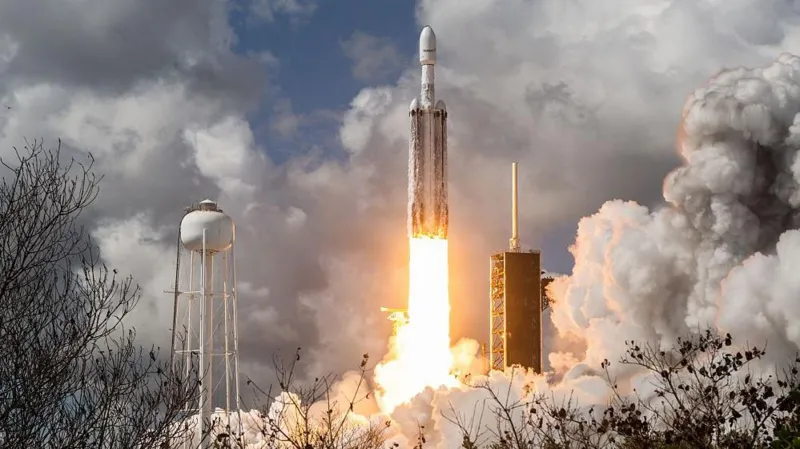
A historic Starship test at Starbase
At Starbase near Boca Chica in Texas, a massive rocket stood ready on the launch pad. SpaceX carried out a major Starship test that drew global attention.
The rocket lifted off and climbed over the Gulf of Mexico. Inside mission control, engineers watched closely as the vehicle completed its early flight phase.
Booster landing becomes the key moment
The main focus of the mission was not only the launch. The critical test came after separation.
About seven minutes into flight, the booster returned toward Earth. Its engines fired again to slow the descent. The system guided it with high precision toward a capture structure known as Mechazilla, often described as robotic arms.
This reusable landing approach supports lower launch costs and faster turnaround times for future missions.
Elon Musk highlights long term space goals
Elon Musk described the test as an important step toward making life multiplanetary. He linked the success of reusable rockets to future missions to the Moon and Mars.
The Starship program plays a central role in that plan. Starship is designed to carry heavy payloads and eventually support human travel beyond Earth.
Growing investor interest before public share access
Attention around SpaceX is increasing as part of the company prepares for share trading access for outside investors.
Until now, ownership has largely stayed with Musk and selected private investors. Interest has surged among retail investors who want exposure to a company tied to space exploration and advanced rocket systems.
Market platforms expect strong demand, with significant allocations planned for individual investors.
Why this moment matters for markets and space
The combination of reusable rocket technology and rising investor demand creates a rare intersection of science and finance.
If successful, SpaceX could reduce launch costs and increase the frequency of space missions. That shift may also influence how private companies fund future exploration programs.