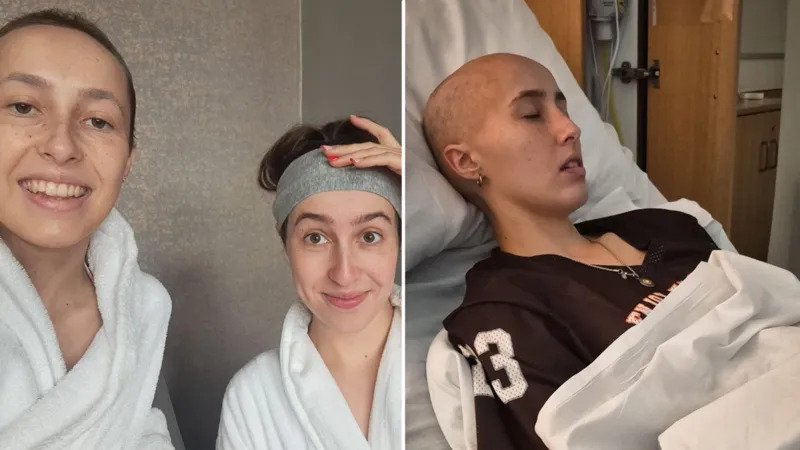
A 24-year-old woman from Cardiff, Caitlin Leggett, has been told she may have just six months to live after her acute myeloid leukaemia returned. She says the idea of leaving her identical twin sister behind feels impossible.
Caitlin was first diagnosed with acute myeloid leukaemia (AML), a fast-moving cancer of the white blood cells, in April 2025. The only early sign was a stubborn rash that did not improve with treatment.
After starting chemotherapy, she went into remission. Doctors later performed a stem cell transplant, hoping it would offer a long-term cure.
Cancer Returns After Initial Remission
In May, Caitlin was told she was in remission. However, by August, the disease had returned and appeared again on her skin. Doctors advised that further treatment in the UK was unlikely to fully cure her condition.
She is now exploring treatment options abroad, most likely in the United States. The cost could reach around £500,000, placing a heavy financial burden on her family.
A Strong Bond Between Identical Twins
Caitlin’s sister, Grace, has remained by her side throughout the illness. The twins say their bond has made the situation even more painful.
Grace said they are both only 24 and never imagined facing something like this so early in life. Caitlin also shared that growing up and living life together makes the thought of separation unbearable.
The sisters studied together at university and have always been extremely close.
Unexpected Medical Discovery
During Caitlin’s treatment, doctors discovered that the sisters are actually identical twins. They were previously believed to be fraternal twins because they developed in separate amniotic sacs.
Genetic testing later confirmed that their markers were identical. This discovery also affected treatment plans, as Grace could no longer act as a stem cell donor due to their nearly identical DNA profile.
Early Symptoms and Diagnosis Journey
Before her diagnosis, Caitlin planned to join the Army as an intelligence officer after graduating in July 2024.
In March 2025, she developed a rash that did not respond to pharmacy creams. Blood tests soon followed, and she was referred to a specialist cancer unit in Cardiff.
There, she received confirmation that she had AML and began urgent treatment.
Treatment Trials and Hope for Remission
While waiting for a suitable donor, Caitlin underwent chemotherapy and achieved remission within two months.
Later, she joined a clinical trial in Manchester using menin inhibitors. The treatment successfully brought her into complete remission before she underwent another planned stem cell transplant.
Despite setbacks, Caitlin continues to pursue treatment options in hopes of extending her life.