
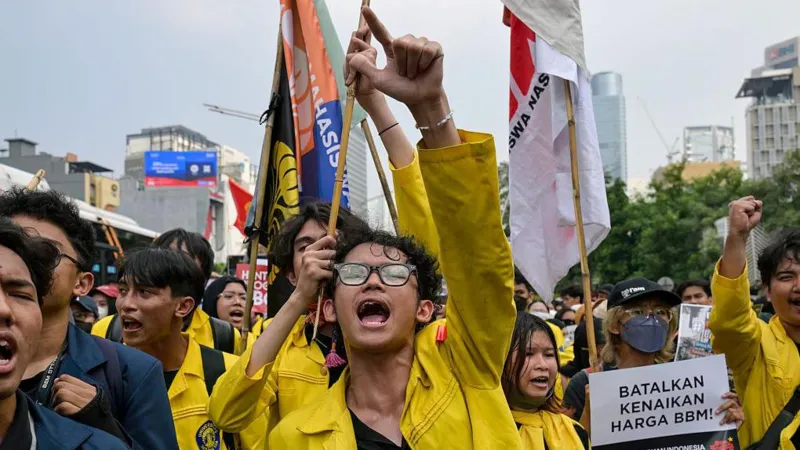
Student Protests Erupt
Hundreds of university students gathered in Indonesia’s capital on Friday. They protested against government policies they believe are hurting the economy. Many warned that continued wasteful spending could push the country toward financial trouble.
The demonstrations took place amid growing public frustration over economic management and rising living costs.
Concerns Over Government Spending and Free Meals Program
Protesters urged President Prabowo Subianto to cut what they called unnecessary state spending. They also demanded the cancellation of a major free meals program.
Students said the program has faced serious problems, including food safety incidents and corruption concerns. They argued that public funds should be used more carefully.
The program remains a key part of the president’s agenda and was central during his election campaign. Government officials say it aims to reduce child malnutrition and improve education outcomes.
Fuel Price Increase Sparks Public Anger
Students also opposed recent fuel price increases introduced by state energy authorities. Prices for widely used fuel types rose significantly, increasing pressure on household budgets.
Many protesters said rising fuel costs are making daily life more difficult, especially for middle income families.
A student voice at the protest said living costs are rising while wages remain under pressure, adding to public frustration.
Clashes at Key Jakarta Landmark
Tensions rose as students attempted to march toward a central landmark in Jakarta. Police formed barricades to block their path.
Some demonstrators pushed against the barriers, and objects were thrown during the confrontation. Police used shields to control the crowd. No confirmed reports of serious injuries appeared at the time.
Social media users shared updates under a slogan that expressed fears about the country’s economic direction.
Rising Economic Pressure and Public Debate
The protests come during a period of currency weakness and wider economic concern. The local currency has recently dropped to new lows, adding to financial anxiety among citizens.
Public debate has grown around government priorities, especially large scale social programs versus economic stability. Critics argue that spending decisions need tighter control.
Officials continue to defend current policies, saying they are designed for long term national development.