
Empty Classrooms Replace
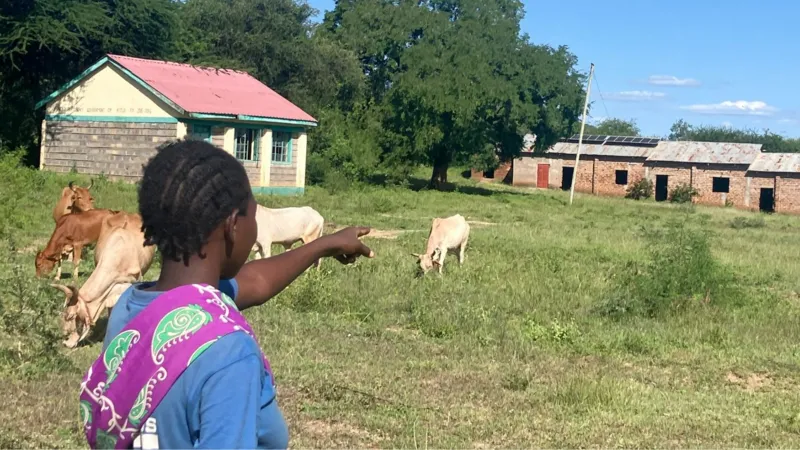
A once active primary school in southern Kenya now stands almost empty as a sharp decline in student enrollment threatens its future. Kaliluni Primary School, which educated more than 200 children just three years ago, now has only five students left, raising concerns about the future of education in many rural communities.
Instead of children filling the classrooms with laughter and learning, cows now wander through the school grounds. Broken classroom doors remain open, while empty desks and scattered books show how quickly the school has lost its students.
Students Forced to Leave Their Local School
Twelve year old Maureen Mwisiwa has continued visiting the school every day, hoping lessons would resume. However, she often arrives only to find no teacher and no classmates waiting for her.
She says missing school has been difficult because children in nearby schools continue their education while she falls behind. Her disappointment reflects the struggles many children in remote Kenyan villages now face.
Her mother, Josephine Muasya, has decided to transfer Maureen to another school where most of her friends have already enrolled. Although the new school offers a better learning environment, it is located about eight kilometers away.
Long and Difficult Journey to Education
Children living in this remote part of Kitui County have no access to public transportation. As a result, many students walk across rough and uneven land to reach school each day.
The daily journey now takes more than one hour, compared to only ten minutes when Kaliluni Primary School was operating normally. Despite the challenge, families believe the longer walk is necessary to secure a proper education for their children.
Education Reform Creates New Challenges
Parents hoped the government would improve the school by assigning more teachers and providing better learning facilities. However, those expectations have not been met.
Kenya introduced a new Competency Based Education system in 2017. The curriculum focuses less on examinations and places greater importance on practical skills, creativity, and student development.
While the education reform aims to improve learning outcomes, many rural schools have struggled to meet the new requirements. Limited resources, teacher shortages, and poor infrastructure have made it difficult for smaller schools to adapt.
Thousands of Rural Schools at Risk
Kaliluni Primary School is not the only institution facing this problem. More than 2,000 rural junior schools across Kenya are now at risk of closure because student numbers continue to decline.
As enrollment falls, many families choose larger schools that offer better facilities and enough teachers to support the updated curriculum. This migration leaves smaller schools with very few students and increases the possibility of permanent closure.
Education experts warn that if the situation continues, children living in remote communities may lose access to nearby schools. As a result, many students will have to travel longer distances each day, creating additional challenges for families with limited resources.
The growing number of nearly empty schools highlights the need for stronger investment in rural education. Without additional teachers, improved facilities, and better support for isolated communities, many more schools could disappear in the coming years.