New Government Seeks Investment and Stronger Regional Partnerships
Bangladesh’s new government is working to attract more Chinese investment while also taking steps to improve relations with neighboring India. The strategy reflects Dhaka’s effort to strengthen its economy and maintain balanced ties with both regional powers.
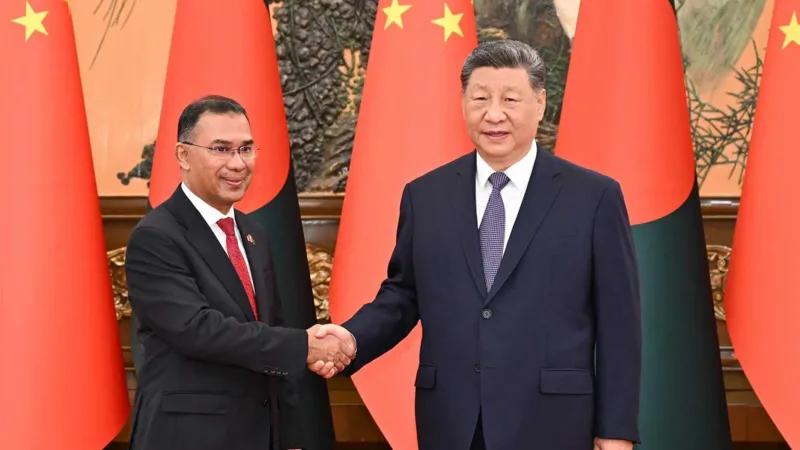
Prime Minister Tarique Rahman recently made his first official overseas visit after taking office. His tour included Malaysia and China, with the Beijing visit receiving the most international attention. Political analysts believe the trip highlighted Bangladesh’s growing focus on economic cooperation and regional diplomacy.
Traditionally, newly elected South Asian leaders have chosen India for their first official visit. Rahman’s decision to travel to China instead was widely viewed as a sign that Bangladesh is adjusting its foreign policy priorities.
China Expands Economic Cooperation With Bangladesh
During the visit, Bangladesh and China signed several agreements aimed at boosting economic development and investment. Among the most notable projects is China’s support for managing the Teesta River, an issue that has remained important for Bangladesh for years.
The two countries also agreed to develop a special economic zone near Mongla Port. Officials expect the project to attract foreign investment, create new employment opportunities, and strengthen Bangladesh’s export sector.
These developments have drawn close attention from India as both Beijing and New Delhi continue to expand their influence across South Asia.
Bangladesh and India Work to Improve Relations
Relations between Bangladesh and India became strained after former Prime Minister Sheikh Hasina was removed from office during the mass uprising in August 2024. She later sought refuge in India, creating diplomatic challenges between the two neighbors.
The interim government led by Muhammad Yunus experienced limited high level engagement with New Delhi. Since Tarique Rahman and the Bangladesh Nationalist Party formed the new government following their election victory in February, both countries have started rebuilding diplomatic ties.
Recent developments suggest that cooperation is gradually returning. Passenger bus services have resumed on key cross border routes between Kolkata and Dhaka, as well as between Dhaka and Agartala, after an 18 month suspension.
India also supplied emergency fuel to Bangladesh through the Friendship Pipeline when conflict in the Middle East disrupted global energy supplies. The move helped Bangladesh manage fuel shortages during a difficult period.
In another positive step, India appointed Dinesh Trivedi as its new High Commissioner to Bangladesh and granted him cabinet rank, reflecting New Delhi’s interest in strengthening bilateral engagement.
Trade Remains Strong Despite Political Differences
Although political disagreements affected relations in recent years, trade between Bangladesh and India has remained significant. Bilateral trade reached approximately £13 billion last year, with India maintaining a trade surplus.
Economic cooperation continues despite occasional trade restrictions introduced during the interim administration. Businesses on both sides hope that improving diplomatic relations will encourage stronger commercial partnerships in the future.
Bangladesh Pursues a Balanced Foreign Policy
Bangladesh appears committed to maintaining constructive relationships with both China and India. By expanding investment opportunities with Beijing while rebuilding cooperation with New Delhi, the government aims to support long term economic growth without relying too heavily on a single regional partner.
Analysts believe this balanced approach could strengthen Bangladesh’s position in South Asia, allowing it to benefit from economic partnerships while protecting its strategic interests.