
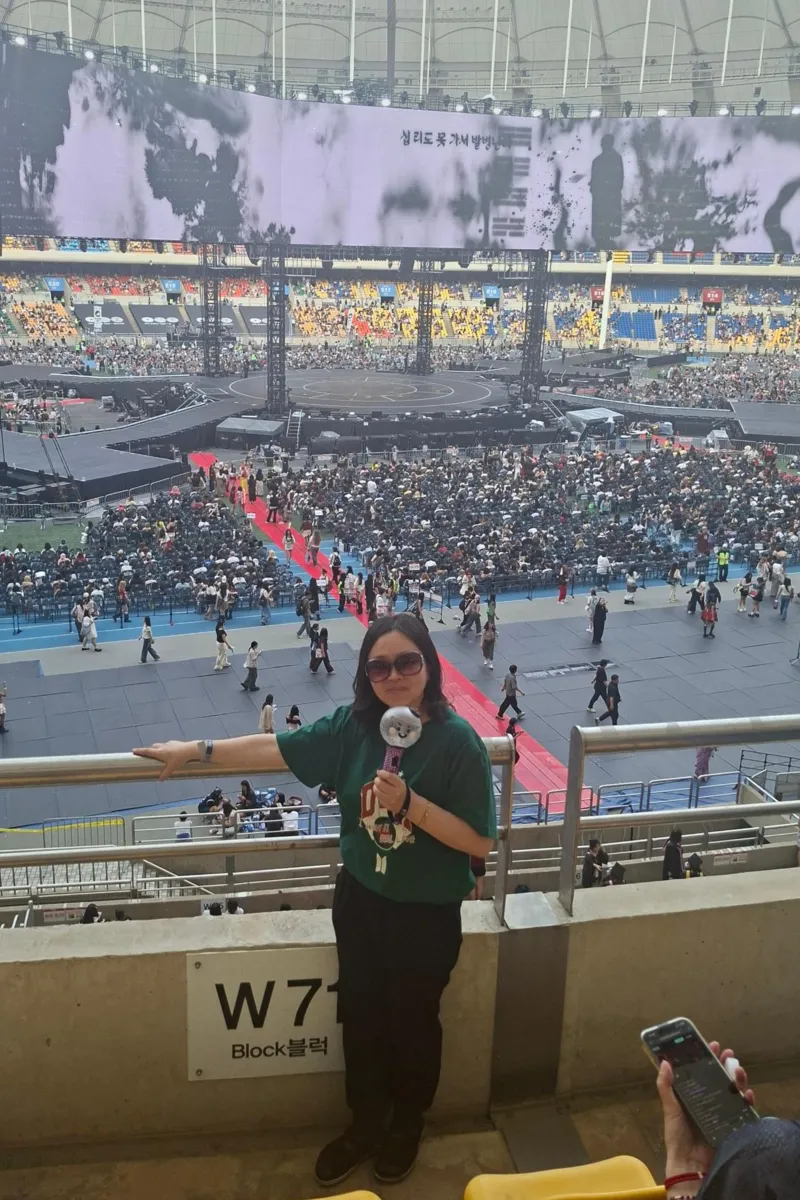
For decades, North Korea has tightly controlled entertainment and public life. The government expects citizens to show complete loyalty to leader Kim Jong Un while blocking outside culture. Despite these restrictions, many North Koreans have secretly discovered K-pop, creating a quiet cultural shift inside one of the world’s most isolated countries.
Several North Korean defectors have shared how South Korean music changed their lives. Some first experienced K-pop only after escaping to South Korea, while others managed to listen to songs secretly before leaving. Although they often did not know the names of the artists, the music offered something different from the controlled entertainment available at home.
Life Under Strict Cultural Control
People raised in North Korea grow up with limited access to foreign media. The government closely monitors television, radio, music, and the internet. Public events are also tightly managed, and citizens are expected to attend state approved activities instead of choosing their own forms of entertainment.
One defector, Lee Yeon su, said she grew up believing South Korea was an enemy because of her family’s military background. After settling in South Korea, she slowly embraced its culture and eventually became a devoted BTS fan. Today, she enjoys attending concerts and supporting her favorite artists without fear.
BTS Becomes a Symbol of Freedom
Lee recently attended another BTS concert after previously missing the full experience because of distance from the stage and poor weather. This time, she celebrated with thousands of fans, singing and cheering throughout the performance.
She explained that choosing who to admire is something many people in North Korea cannot experience. In South Korea, she feels free to support artists she genuinely enjoys, making every concert even more meaningful.
Secret Fans Inside North Korea
Other defectors revealed that K-pop has quietly reached people inside North Korea despite harsh penalties. Listening to South Korean music or watching its entertainment can lead to severe punishment, including imprisonment. Even so, some people continue to take the risk.
Many secretly watched music performances featuring colorful fashion, modern hairstyles, and energetic dance routines. These performances introduced a completely different lifestyle from the one promoted by the North Korean government.
More Than Entertainment
Defectors say K-pop represents much more than music. It introduces ideas of personal freedom, creativity, and individual choice. For young North Koreans, these messages provide hope and curiosity about life beyond their country’s borders.
Groups such as BTS, Blackpink, Girls’ Generation, Teen Top, and 2PM have become surprisingly familiar names among some North Koreans. According to defectors, the Korean name of BTS has even become part of everyday slang, with people joking about “Bangtan” clothing and accessories.
A Quiet Cultural Change
Although North Korea continues to block foreign entertainment, K-pop has found unexpected ways to reach its people. Defectors believe the music has inspired many young North Koreans to imagine a different future, showing how culture can cross even the world’s most heavily guarded borders.

![Vikram-1 took off from the Indian Space Research Organisation's launch facility in Sriharikota on Saturday What if launching a satellite was as easy as calling a cab? That's the vision behind an Indian private rocket company that achieved its first orbital launch on Saturday. Skyroot Aerospace, which recently became India's first space tech unicorn after reaching $1.1bn valuation, launched Vikram-1 from the Indian Space Research Organisation's (Isro) launch facility in Sriharikota in southern India. The seven-storey rocket lifted off at 12:05 India time [06:35 GMT] and travelled 280 miles (450km) to reach the Low Earth Orbit in a 16-minute flight. Skyroot is the first Indian private company to launch a rocket into orbit, making India only the third country, after the US and China, with a private company capable of orbital launches. "Vikram-1 Test Flight-1 has reached orbit... History is made," the company posted on X. The successful Vikram-1 launch will take Skyroot closer to its goal of offering what it calls a "cab service to space", where companies can hire a rocket "to ride to a unique location in the orbit to place a satellite or visit a space station". Skyroot Aerospace Skyroot Aerospace's Vikram-1 rocket inside the company's Infinity Campus in Hyderabad, IndiaSkyroot Aerospace The rocket was named after Vikram Sarabhai, regarded as the father of India's space programme The rocket - named after Vikram Sarabhai, who is called the father of India's space programme - is small and has the capacity to carry payloads of up to 350kg, Skyroot co-founder and CEO Pawan Kumar Chandana told the BBC before the launch. Chandana says today, access to space remains "a major bottleneck, with satellite operators often waiting for months or even years for a launch opportunity" and that their venture expects to change that. He says Skyroot aims to cut long waits for satellite launches by offering dedicated missions for small payloads. Instead of sharing space on large rockets that fly on fixed schedules, customers can book a launch tailored to their satellite and its required orbit - much like taking a taxi instead of waiting for a train. "If you want to just go to a friend's house, you don't need a train, you book a cab, an Uber. What we are offering is a cab service to space, which can be used to ride to a unique location in the orbit to place a satellite or visit a station." Skyroot's model would appear similar to that of Rocket Lab in the US, which provides small-lift launch vehicles. The Indian test launch mission called Aagman - Sanskrit for arrival - has placed into orbit six payloads. They include scientific instruments such as a robotic arm for removing space debris, an Earth observation camera and satellites, including one from a German company.](https://banerclub.com/wp-content/uploads/2026/07/Food-delivery-rider-wins-Chinas-top-literary-prize-1-150x150.jpg)