
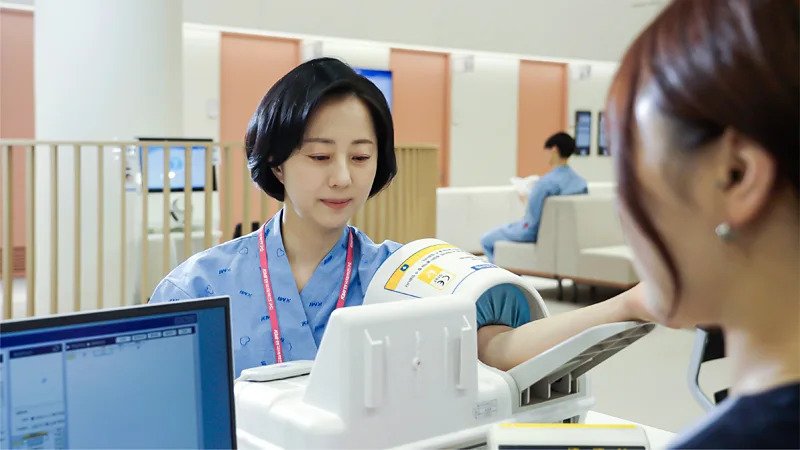
Travelers are increasingly include full health check-ups on their South Korean itinerary, enticed by low pricing, quick findings, and English-language support.
Liping Chao has just arrived in Seoul, and the city’s iconic skyscrapers are visible beyond his taxi window.
Instead of climbing Namsan Tower or perusing Myeongdong’s famed boutiques, he travels to the city’s Mapo neighborhood and visits Medione Medical Center.
In the immaculate, large waiting area, he sees more foreign faces than Koreans. He changes in the locker area and stores his possessions.
This wasn’t a medical emergency; it was merely part of his trip itinerary. Chao is one of an increasing number of international travelers.
A contagious trend
It’s a trend that shows no sign of slowing. According to South Korea’s Ministry of Health and Welfare.
2.01 million overseas patients would come in 2025.
Patients primarily come from China and Japan, followed by Taiwan and the United States. Donkyo Seo, CEO of Himedi, a Seoul-based medical concierge, notes that “for Korea, medical tourism is an export industry” that is actively encouraged by laws aimed.
But why jet all the way to South Korea for medical treatment? According to Haemin Lee, CEO of Seoul-based travel planner Creatrip, the ultimate decision is based on cost and efficiency.
While patients in many nations encounter referrals, insurance approvals, and significant wait periods, many Korean screening facilities.
Why Korea Attracts Medical Tourists
While patients in many countries encounter referrals, insurance approvals, and lengthy wait periods, many Korean screening centers provide complete comprehensive health tests in a single appointment.
Even better: South Korea’s healthcare system, ranked second best in the world by the 2025 CEOWorld Healthcare Index, is extremely economical due to government regulation of medical expenses. “The difference is significant,” Lee explains.
“In many cases, the price of a single MRI in the US can cover a comprehensive full-body screening in Korea… Even after factoring in airfare, it can still be more affordable.”
Aside from the attractiveness of its high-quality healthcare and reduced expenses, Hyeonah Hong, Head of Division at Korea Medical Institute (KMI), states “Korea has a well-established prevention-focused healthcare system.”