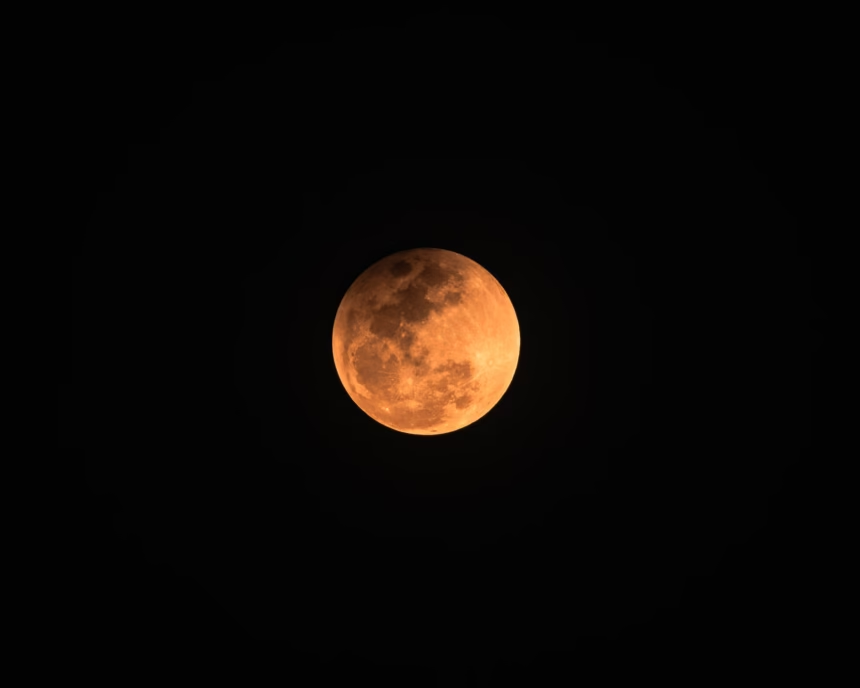
A near total lunar eclipse will appear across large parts of North and South America on Thursday night, August 27, 2026. Millions of people will have a chance to watch the Moon turn a deep reddish color during the event.
The eclipse will occur as Earth moves between the Sun and the Moon. Earth will then cast its shadow across the Moon’s surface.
At the peak of the event, around 96 percent of the Moon will fall within Earth’s shadow. This will create a striking view for people watching from areas where the eclipse is visible.
| Date | August 27, 2026 |
| Event | Near total lunar eclipse |
| Moon Covered | About 96% |
| Also Known As | Blood Moon |
| Main Viewing Areas | North and South America |
| Peak Time | About 10:33 p.m. EST |
| Moon's Color | Reddish or orange |
When Will the Lunar Eclipse Happen?
The lunar eclipse will begin at around 9:23 p.m. EST. It will reach its peak at approximately 10:33 p.m. EST.
The event will mainly be visible across North and South America. Some areas of Europe and Africa will also have an opportunity to see part of the eclipse.
People often call a lunar eclipse a “blood moon” because the Moon can appear reddish or orange during the event.
Earth’s atmosphere causes this color change. Sunlight passes through the atmosphere before reaching the Moon. The atmosphere scatters much of the blue light while allowing more red and orange light to reach the lunar surface.
As a result, the Moon can take on a dramatic red appearance while Earth’s shadow covers it.
What Happens During a Lunar Eclipse?
A lunar eclipse occurs when the Sun, Earth, and Moon line up in space.
Normally, sunlight reaches the Moon directly. During an eclipse, Earth moves between the Sun and Moon. Its shadow then falls across the lunar surface.
Unlike a solar eclipse, people can safely watch a lunar eclipse with their eyes. No special eye protection is required.
Where Can People See the Eclipse?
The best viewing opportunities will be in North and South America.
Parts of Europe and Africa may also see the eclipse, depending on local conditions and the time of the event.
Clear skies will make the eclipse easier to observe. People should choose a location away from bright city lights when possible.
The lunar eclipse comes shortly after a major solar eclipse earlier in August.
During that event, the Moon passed directly between Earth and the Sun. This blocked sunlight in some areas and caused temporary darkness during the daytime.
Solar and lunar eclipses happen when the Sun, Earth, and Moon reach a particular alignment. However, each type of eclipse creates a very different experience for viewers.
Next Lunar Eclipse Details
According to NASA’s eclipse information, the August 27 to 28 event will be a partial lunar eclipse rather than a completely total eclipse.
The event will be visible from several regions, including the Americas, Africa, Europe, and parts of the Pacific.
The eclipse is expected to reach its peak at about 9:13 p.m. PDT, 12:13 a.m. EDT, or 4:13 a.m. UTC.
Final Thoughts
The near total lunar eclipse will give skywatchers across the Americas a chance to see one of the most striking events in the night sky.
With most of the Moon entering Earth’s shadow, the reddish appearance could make the event especially memorable. People in areas with clear skies should have a good opportunity to observe the Moon as it changes during the eclipse.