The conflict between the United States and Iran has reached roughly six months, lasting much longer than President Donald Trump originally expected. Trump had initially suggested the war could last around four to five weeks.
The prolonged conflict has created major concerns for global energy markets. However, financial markets have remained more stable than many expected, despite continued disruption around the Strait of Hormuz.
Quick Facts
| Detail | Information |
|---|---|
| What happened | The U.S. Iran conflict has continued for about six months. |
| Where | Iran, the Persian Gulf and the Strait of Hormuz. |
| When | According to the supplied report, the conflict began on February 28, 2026. |
| Who is involved | The United States, Iran, Oman, Qatar and other regional and international actors. |
| Current status | Fighting and economic pressure continue while diplomatic efforts remain active. |
| Why it matters | The Strait of Hormuz is a major energy route, making prolonged disruption a global economic risk. |
Hormuz Crisis Pressures Energy Markets
The U.S. Iran conflict has lasted far beyond the timeline Trump originally discussed.
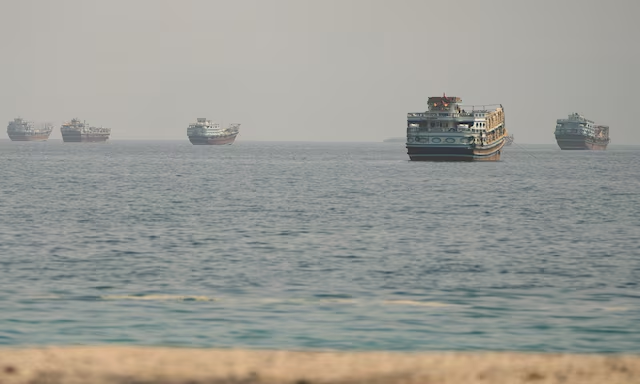
The biggest concern remains the Strait of Hormuz. The waterway normally carries a large share of the world’s energy supplies. Continued disruption has reduced the amount of oil and other energy products moving through the region.
Despite these problems, Brent crude has remained below $90 per barrel. That level is higher than before the conflict, but it remains below the extreme prices many investors feared.
The energy market is still under pressure. Refined fuels, especially diesel, have shown stronger signs of supply stress.
Hormuz Disruption and Diplomacy
The Strait of Hormuz has faced major disruption since February 28.
U.S. Energy Secretary Chris Wright recently said more than 8 million barrels of oil were leaving the Gulf each day. However, shipping data cited in the supplied Reuters report suggested a figure closer to 5 million barrels per day.
Asian crude imports also remained weak in August. That points to continued pressure on regional oil flows.
Diplomatic efforts are also continuing.
Iran and Oman have discussed arrangements for a possible temporary corridor through the Strait of Hormuz. Qatar has also held discussions with Iranian officials as regional countries seek a path toward more normal transit.
Washington and Tehran, however, have not reached a new agreement.
Global Economic Impact
The conflict has consequences far beyond the Middle East.
Higher energy costs can increase transportation and manufacturing expenses. They can also add pressure to consumer prices.
Refined fuel markets deserve particular attention. Even if crude oil prices remain relatively controlled, shortages of diesel and other refined products could create problems for businesses and consumers.
The conflict also affects financial markets. Investors are watching developments around the Strait of Hormuz, U.S. sanctions and diplomatic negotiations.
At the same time, the United States faces other economic pressures.
U.S. Markets and the AI Boom
Wall Street has received support from strong technology earnings.
Nvidia reported better than expected quarterly results and gave investors a positive outlook for future revenue. Demand for artificial intelligence chips remains strong.
Nvidia shares rose sharply after the results.
Salesforce and CrowdStrike also reported encouraging financial results. Both companies raised their annual revenue outlooks.
The strong technology sector has helped offset some of the concerns surrounding geopolitical risks.
Federal Reserve Faces Inflation Pressure
U.S. inflation remains another important issue for investors.
The Personal Consumption Expenditures index, the Federal Reserve’s preferred inflation measure, increased 0.2% in July. Annual inflation reached 3.7%.
The figures came in slightly above market expectations.
The data pushed Treasury yields higher. The 10 year Treasury yield remained around 4.7%.
Investors are closely watching Federal Reserve Chair Kevin Warsh for clues about future interest rate decisions and the central bank’s approach to inflation.
The next major development could come from diplomatic efforts involving Iran, Oman and Qatar.
A deal that improves shipping through the Strait of Hormuz could reduce some pressure on energy markets.
However, the situation remains uncertain. Washington and Tehran still face major differences, while the United States continues to apply economic pressure on Iran.
The Strait of Hormuz remains the biggest energy risk. Oil prices have stayed below $90, but refined fuel markets continue to show signs of stress.
Diplomatic efforts could help reduce the pressure, but the conflict remains unresolved.