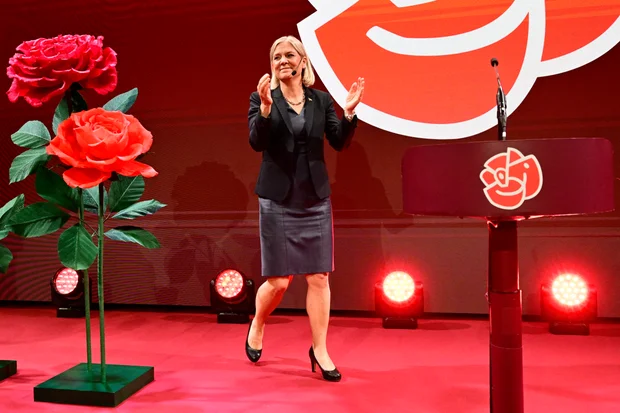
Sweden faces political uncertainty after a closely fought national election left the left wing opposition with a narrow lead. With 95% of the votes counted, the opposition held a three seat advantage in the 349 seat parliament.
Social Democratic leader Magdalena Andersson and outgoing Prime Minister Ulf Kristersson both want to form the next government. However, neither side has an easy path to a majority.
Quick Facts
| Detail | Information |
|---|---|
| Election | Sweden Election 2026 |
| Date | September 13, 2026 |
| Location | Sweden |
| Leading Bloc | Left wing opposition |
| Lead | 3 seats with 95% of votes counted |
| Parliament Seats | 349 |
| Social Democratic Leader | Magdalena Andersson |
| Outgoing Prime Minister | Ulf Kristersson |
| Sweden Democrats Vote Share | 17.6% |
| Previous Vote Share | More than 20% |
| Current Situation | Coalition talks are expected to be difficult |
| Next Key Date | September 29, 2026, earliest possible parliamentary vote for prime minister |
Sweden Faces Tough Coalition Talks After Election
The Swedish election has left the country facing difficult coalition negotiations. The final result remains uncertain because some votes are still being counted.
The left wing opposition currently has a small parliamentary advantage. Still, forming a government could prove difficult because the parties in the bloc have major policy differences.
Magdalena Andersson, leader of the Social Democrats, is expected to explore options with the Greens, Left Party and Centre Party.
The Centre Party has said it won’t support a government that includes the Left Party. At the same time, the Left Party wants to be part of any government it supports.
These differences could make negotiations difficult.
Sweden Election 2026: Far Right Loses Ground
The Sweden Democrats suffered an important setback in the election. The anti immigration party won 17.6% of the vote, down from more than 20% in the previous election.
The result pushed the Sweden Democrats into third place. The Social Democrats and Kristersson’s Moderates finished ahead of the party.
The Sweden Democrats first entered parliament in 2010. Four years ago, they became Sweden’s second largest party.
Since then, the party has played an important role in supporting Kristersson’s government from outside the cabinet. This gave it influence over issues such as immigration and crime.
Sweden Democrats Lose Ground in Election
The Sweden Democrats suffered an important setback in the election. The anti immigration party won 17.6% of the vote, down from more than 20% in the previous election.
The result pushed the Sweden Democrats into third place. The Social Democrats and Kristersson’s Moderates finished ahead of the party.
The Sweden Democrats first entered parliament in 2010. Four years ago, they became Sweden’s second largest party.
Since then, the party has played an important role in supporting Kristersson’s government from outside the cabinet. This gave it influence over issues such as immigration and crime.
Sweden Election Result Still Hangs in Balance
With 95% of votes counted, the four opposition parties held a three seat lead.
The final numbers could still change. Officials expect some remaining votes to be counted by Wednesday.
Political analyst Mats Knutson warned that the result could lead to a long process. He also said a snap election could become possible if the parties fail to reach an agreement.
Sweden’s parliament could vote on a new prime minister on September 29 at the earliest.
Sweden’s previous government formation also required negotiations.
After the 2022 election, politicians took 37 days to form a government. The process took much longer after the 2018 election, when it lasted 134 days.
Swedish politics has become more divided in recent years. The latest election shows that several parties may need to negotiate across political lines to form a stable government.
Election Result Could Shape Sweden’s Future
The election result could affect Sweden’s approach to immigration, crime, welfare policy and other major national issues.
A government led by Andersson could place greater emphasis on Sweden’s welfare state. A Kristersson led government would continue a conservative approach and would need to manage its relationship with the Sweden Democrats.
The result also shows that the Sweden Democrats may have reached a difficult stage after years of electoral growth.