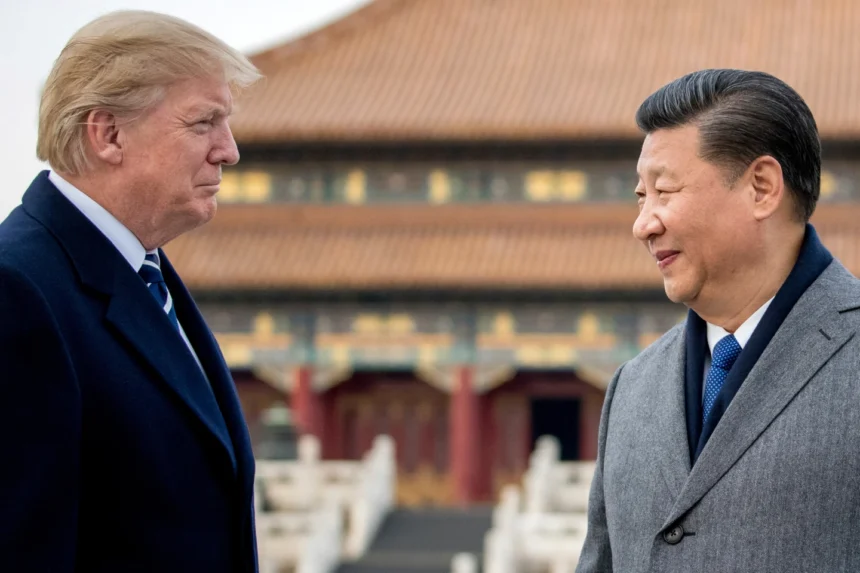
U.S. President Donald Trump is hosting Chinese President Xi Jinping in Washington this week as tensions between the world’s two largest economies continue to grow. Artificial intelligence, trade, technology, Iran and Taiwan remain major points of disagreement.
The meeting comes as Washington and Beijing try to prevent another major breakdown in relations. The two leaders are not expected to reach a major agreement. Instead, their talks could focus on keeping communication open and managing areas of competition.
Quick Fact
| Detail | Information |
|---|---|
| What happened | Donald Trump is hosting Chinese President Xi Jinping for high level talks. |
| Where | Washington, D.C., United States |
| When | September 24, 2026 |
| Who is involved | Donald Trump and Xi Jinping, along with senior U.S. and Chinese officials. |
| Main issues | Artificial intelligence, trade, technology, Iran and Taiwan. |
| Current status | The two countries continue diplomatic talks while competing over trade and technology. |
| Why it matters | U.S. China policies can affect global trade, technology, supply chains and international security. |
Trump and Xi Try to Keep US China Relations Stable
Xi’s visit marks his first trip to Washington in a decade. It also marks the third meeting between Xi and Trump since Trump returned to the White House.
The talks come after a period of severe economic tension. The two countries previously imposed very high tariffs on each other’s goods. Those measures raised concerns about wider effects on the global economy.
The situation has since changed. Washington and Beijing have moved away from broad tariff increases. However, both governments continue to target specific companies, products and technologies.
Both sides have also discussed the need to manage disagreements while keeping diplomatic channels open.
Artificial Intelligence Becomes a Major Flashpoint
Artificial intelligence has become one of the most important issues in the U.S. China relationship.
Washington has restricted China’s access to some advanced AI chips. U.S. officials have also accused Chinese companies of using American AI technology to improve their own systems.
Chinese officials reject those accusations and have criticized U.S. efforts to restrict China’s access to advanced technology. Beijing has also pushed for greater international involvement in setting AI rules.
Such discussions show that competition and cooperation can happen at the same time.
The earlier U.S. China tariff conflict has eased, but trade remains a sensitive issue.
Both countries continue to use targeted restrictions. Washington has taken action against Chinese companies and certain advanced technologies. Beijing has responded with its own restrictions on U.S. companies and technology.
The current approach appears less focused on broad tariffs and more focused on specific industries and strategic technologies.
Iran and Taiwan Remain Difficult Issues
Trade and technology are not the only challenges facing Trump and Xi.
Iran also creates tension between Washington and Beijing. The Trump administration has sought to put economic pressure on Tehran. China, however, maintains important economic ties with Iran.
The issue comes as Trump says talks with Iran are continuing. On September 22, Trump said he believed the two sides could eventually reach a settlement.
US China Talks Focus on Stability
Trump and Xi are meeting at a time when U.S. China competition remains intense.
AI, trade, technology, Iran and Taiwan will continue to test the relationship. At the same time, both governments have reasons to avoid another major economic confrontation.
The immediate focus is therefore on communication and stability. Whether that approach can produce longer term agreements will become clearer after the talks.