More than 800 wildfires continue to burn across Canada, sending thick smoke across the border and causing dangerous air quality in several parts of the United States. Officials have issued health alerts as smoke affects millions of people from the Upper Midwest to the Northeast.
Over 800 Wildfires Continue to Burn
Canada is currently battling 857 active wildfires, including more than 20 new fires reported in a single day. Most of these fires remain out of control, making it difficult for firefighters to slow their spread.
Large wildfire clusters in northwestern Ontario continue to produce massive smoke clouds. These smoke plumes are drifting across nearby provinces and into several US states.
Smoke Causes Dangerous Air Quality
Smoke from the fires has created hazardous air quality across northern Michigan and Minnesota. Health officials advise residents to stay indoors, keep windows closed, and avoid outdoor activities whenever possible.
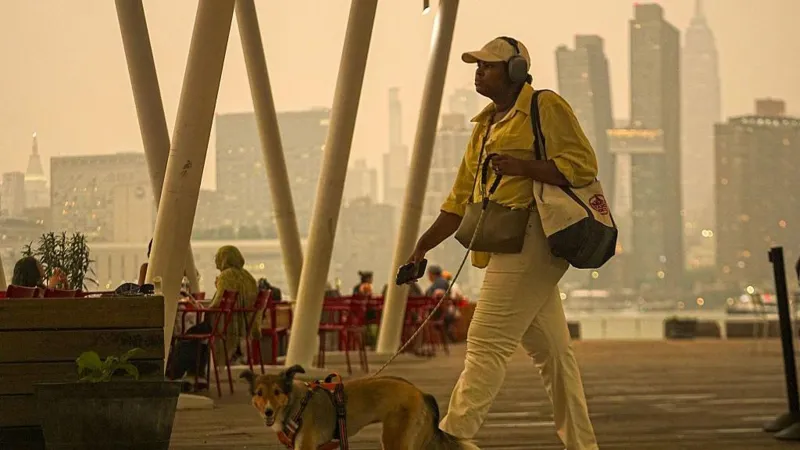
Air quality alerts also cover parts of the Great Lakes region, the Upper Midwest, and the northeastern United States. In western New York, air pollution has reached a “very unhealthy” level. Meanwhile, the New York City metropolitan area is experiencing “unhealthy” air conditions.
Residents have reported hazy skies along with deep orange and red sunrises and sunsets as wildfire smoke spreads through the atmosphere.
New York Activates Emergency Measures
New York City has expanded its emergency response by opening cooling centers and distributing KN95 face masks. Local officials encourage people, especially children, older adults, and those with breathing conditions, to reduce outdoor exposure until air quality improves.
Rain May Bring Only Limited Relief
Thunderstorms are expected across parts of Ontario during the next few days. However, weather experts believe the rainfall will likely provide only limited help because many fires continue to burn over large areas.
Strong northwesterly winds are expected to push smoke into northern US states through the weekend. As a result, smoke may also reach New Jersey, where large public events are scheduled.
Meteorologists expect wind patterns to shift early next week. If that happens, more smoke will move toward Quebec, allowing air quality to improve across many southern US regions.
Detroit Records the World’s Worst Air Quality
According to global air quality monitoring data, Detroit currently has the poorest air quality in the world. Minneapolis and Toronto also rank among the cities experiencing the highest levels of air pollution because of wildfire smoke.
Political Leaders Respond
Several lawmakers from Michigan have urged the Canadian government to strengthen wildfire prevention and forest management efforts. They expressed concern that smoke has affected their state for three consecutive wildfire seasons.
At the same time, US Ambassador to Canada Pete Hoekstra praised the long standing cooperation between both countries. He said the United States and Canada will continue working together to respond to cross border wildfire emergencies.
Ongoing Health Concerns
Wildfire smoke contains tiny particles that can enter the lungs and worsen breathing problems. Health experts recommend limiting outdoor activities, using air purifiers when available, and wearing high quality masks if outdoor travel becomes necessary.
Officials continue to monitor wildfire activity closely as emergency crews work to contain the fires and protect affected communities.