By using this site, you agree to the Privacy Policy and Terms of Use.
Accept
Baner ClubBaner ClubBaner Club
  • Home
  • News
    NewsShow More
    Attenborough’s unforgettable encounter with mountain gorillas in Rwanda
    Attenborough’s unforgettable encounter with mountain gorillas in Rwanda
    April 27, 2026
    Raghu Rai: The photographer who helped India see itself Rich tributes continue after the passing of Raghu Rai at the age of 83. He stood as one of India’s most respected photojournalists. Over more than five decades, he documented the country with depth, honesty, and sharp visual clarity. His photographs did more than record events. They helped people understand them. His work influenced how India viewed its political shifts, cultural icons, and social struggles. Early career and rise in photojournalism Raghu Rai began his professional journey in 1966 with The Statesman newspaper. He quickly developed a strong eye for real life moments. His work later expanded into editorial roles at India Today and Sunday magazine. He joined Magnum Photos in 1977. This step marked a major point in his career. Henri Cartier Bresson supported his entry, and this connection shaped his visual style and thinking. Political history through his lens Rai documented key political moments in India with rare access and sensitivity. His photographs of Indira Gandhi stand among his most recognized work. He captured her in public rallies, campaign trails, and private party meetings. He focused on expression, body language, and atmosphere rather than staged poses. His images gave the public a closer view of political power and decision making in India. Documenting conflict and crisis Raghu Rai also covered some of India’s most difficult periods. He worked in Bhopal after the gas tragedy and captured its human impact. He also documented Punjab during the militancy period in the 1980s, where violence affected thousands of lives. His photographs from these events carried emotional weight. He showed suffering, tension, and resilience without turning away from uncomfortable realities. Portraits of culture and creativity Rai photographed many well known cultural figures including Lata Mangeshkar, Satyajit Ray, M F Hussain, and Amitabh Bachchan. He focused on natural expressions and real interaction rather than formal staging. His portraits often revealed respect between the subject and their audience. He captured the human side of fame and creativity. A philosophy beyond technique Raghu Rai often described photography as more than skill or equipment. He treated it as a way to observe life closely and truthfully. His approach shaped generations of photographers in India and beyond. His work continues to influence visual storytelling today.
    Raghu Rai: The photographer who helped India see itself
    April 27, 2026
    Rose Dugdale: From Heiress to Infamous IRA Art Heist Figure Bridget Rose Dugdale was born into wealth and privilege in 1941, with a future that seemed fully planned. She grew up surrounded by luxury, received private tutoring from a French governess, and attended elite finishing schools across Europe. Like many young women from aristocratic families, she entered high society as a debutante and was presented to the Queen. Her life appeared set for tradition, comfort, and status. But Dugdale chose a very different path. A Rejection of Privilege As she entered adulthood, Dugdale began to question the world she was raised in. She felt uneasy about the lavish lifestyle and strict social expectations. The “Season,” a formal series of elite social events designed to introduce young women into society, only deepened her discomfort. She later criticized her own coming-out ball, describing it as excessive and wasteful. The event, she said, cost as much as what dozens of elderly people might live on for months. That realization marked a turning point. Dugdale started distancing herself from her privileged background. A Radical Shift in Beliefs By her mid-30s, Dugdale had completely broken away from her former life. She gave away her inheritance and even took money from her own family to support causes she believed in. Her views became strongly anti-establishment, and she aligned herself with Irish republican ideals. Her actions soon moved beyond protest. Dugdale became involved with the Irish Republican Army (IRA), a militant group engaged in conflict over Northern Ireland. She participated in direct operations, including a helicopter hijacking used to attack a police station. This act shocked many, given her elite upbringing. One of History’s Largest Art Heists In April 1974, Dugdale took part in a major art theft that gained global attention. The group targeted a wealthy estate and stole valuable paintings. During the robbery, they removed artworks directly from their frames, causing damage in the process. The stolen collection included works of major cultural and financial value. This operation became known as one of the largest art heists ever carried out. Dugdale’s involvement placed her firmly at the center of the crime. It also showed how far she had moved from her earlier life of formality and tradition. From Socialite to Militant Operative Dugdale’s transformation did not stop at theft. She later became involved in developing explosives for IRA operations. Her journey from aristocrat to militant activist remains one of the most unusual personal shifts in modern history. Her story reflects a deep ideological change. She rejected wealth, status, and comfort in favor of political struggle and radical action.
    Rose Dugdale: From Heiress to Infamous IRA Art Heist Figure
    April 27, 2026
    Four suspects appear in court after a targeted arson attack on Jewish ambulances in London, causing £1m damage and raising counter-terror concerns.
    Four Charged Over Jewish Ambulance Arson in London
    April 24, 2026
    A woman was rescued after falling into a collapsed pit toilet in the Australian outback and being trapped for three hours before a passerby helped save her.
    Woman Saved from Pit Toilet in Australian Outback
    April 24, 2026
  • Business
    BusinessShow More
    The Chinese Sports Brand Challenging Nike and Adidas Globally
    April 27, 2026
    canda
    Canada Launches “Canada Strong Fund” to Boost Economy and Development
    April 27, 2026
    From Scientist to Silk Farmer: A New Chapter in India’s Sericulture Industry A Bold Career Shift Dr. Jolapuram Umamaheswari made a life-changing decision six years ago. She left her career as a scientist in Singapore and returned to India. At that time, she had no job. Still, she was clear about one thing, she wanted independence and control over her work. Instead of looking for another research role, she explored different options. After careful study, she chose silk farming, also known as sericulture. This field combines biology, agriculture, and business. For her, it felt like a natural extension of her scientific background. Turning Science into Practice Sericulture involves raising silkworms on mulberry leaves. Farmers then collect the cocoons and extract silk fibers. Although the process sounds simple, it requires precision and care. In the beginning, Umamaheswari faced several problems. Diseases affected the silkworms. Yields were inconsistent. Managing a living system also required constant attention. These early challenges tested her patience. However, she used her scientific knowledge to improve her methods. She focused on better hygiene. She refined feeding practices. She also controlled the environment more carefully. Over time, these small changes made a big difference. Consistent Growth and Stable Income Today, her hard work has paid off. She produces around 10 batches of silk each year. Each cycle takes about 25 to 30 days. This allows her to maintain a steady production flow. She now earns nearly $1,000 per month. The income feels stable, almost like a regular salary. This is one of the biggest advantages of sericulture. Unlike many farming activities, it does not depend only on seasons. Umamaheswari believes silk farming offers reliable returns when managed properly. Her journey shows how science can support agriculture in practical ways. It also highlights new opportunities in India’s growing silk industry.
    From Scientist to Silk Farmer: A New Chapter in India’s Sericulture Industry
    April 24, 2026
    China’s manufacturing and export economy faces rising costs as Iran conflict disrupts oil supply routes. Fabric traders and factories feel pressure
    China Economy Faces New Pressure as Iran Conflict Pushes Up Oil Costs and Trade Challenges
    April 23, 2026
    A clear look at why Singapore Changi Airport ranks as the world’s best airport, focusing on its efficiency, technology, passenger comfort
    A travel experience that feels effortless
    April 23, 2026
  • Sports
    SportsShow More
    Sawe Shatters Marathon Limits with Historic Sub-Two Run in London
    Sawe Shatters Marathon Limits with Historic Sub-Two Run in London
    April 27, 2026
    Raiders Select Fernando Mendoza as First Overall Pick in 2026 NFL Draft
    Raiders Select Fernando Mendoza as First Overall Pick in 2026 NFL Draft
    April 24, 2026
    Carlos Alcaraz withdraws from the 2026 French Open due to a wrist injury. The defending champion will miss the clay season, opening the door for rivals.
    Carlos Alcaraz to Miss French Open 2026 Due to Wrist Injury
    April 24, 2026
    Bruno Fernandes Manchester United future
    Bruno Fernandes Explains Why He Stayed at Manchester United Despite Tough Season
    April 24, 2026
    Fernando Mendoza rises from overlooked prospect to first overall NFL Draft pick, inspired by his mother’s battle with multiple sclerosis and her strength
    Fernando Mendoza NFL Draft Journey Inspired by His Mother’s Strength
    April 24, 2026
  • Entertainment
    EntertainmentShow More
    Taylor Swift Moves to Protect Voice and Image From AI Misuse
    April 27, 2026
    Melania Trump criticizes Jimmy Kimmel over a controversial joke made before the White House dinner shooting,
    Melania Trump Criticizes Jimmy Kimmel Over Controversial Joke After White House Dinner Shooting
    April 27, 2026
    SEO Title: Half Man Review: Richard Gadd Returns With a Dark and Intense Drama
    Half Man Review: Richard Gadd Returns With a Dark and Intense Drama
    April 23, 2026
    Ruth Slenczynska, legendary pianist and last student of Rachmaninoff, dies at 101
    Ruth Slenczynska, legendary pianist and last student of Rachmaninoff, dies at 101
    April 23, 2026
    King Charles Honoured with Green Badge for Environmental Efforts
    April 22, 2026
  • Blogs
    BlogsShow More
    Middle East conflict 2026
    Iran launches “Wave 22,” a morning assault
    March 6, 2026
    Savannah’s Best Spots for Wings, Burgers and Other Southern Favorites
    Savannah’s Best Spots for Wings, Burgers and Other Southern Favorites
    March 4, 2026
    US forces capture Nicolás Maduro in Venezuela, leading to Delcy Rodríguez becoming acting president. International criticism rises as oil access and political stability dominate headlines.
    US Military Operation in Venezuela: Maduro Captured, Rodriguez Becomes Acting President
    March 3, 2026
    hair transplant
    Hair Transplant Costs in the USA. What you need to know
    February 23, 2026
    One of the most famous legends about its origin comes from India
    Indian Legend Behind the Discovery of Tea
    February 17, 2026
  • Others
    • Technology
    • Weather
    • Fashion
  • Matrimony
    • Register
  • Marketplace
    • Become a vender
  • Jobs
  • Chat Room
  • Contact
  • Log In
Reading: Earth Observation For Biodiversity And Conservation
Share
Notification
Font ResizerAa
Font ResizerAa
Baner ClubBaner Club
Search
  • Privacy Policy
  • Terms and Conditions
© 2022 BanerClub. All Rights Reserved.
Baner Club > Blog > Innovation > Earth Observation For Biodiversity And Conservation
Innovation

Earth Observation For Biodiversity And Conservation

Last updated: 2026/01/26 at 4:16 PM
Published January 26, 2026
Share
5 Min Read
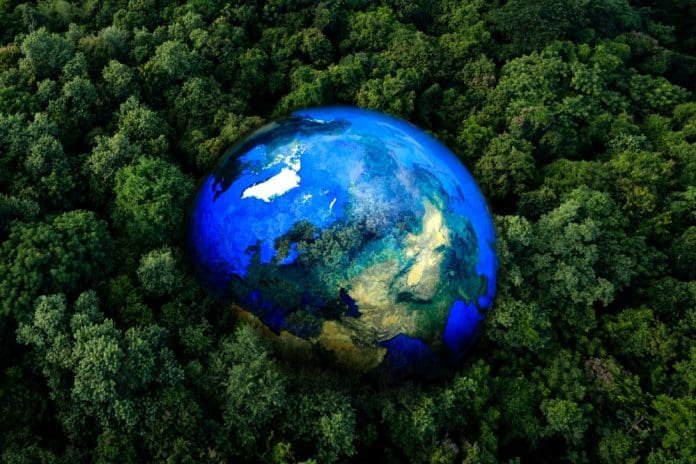
Earth observation uses satellites and AI to monitor ecosystems, track endangered species, and guide global biodiversity conservation efforts.
SHARE

Protecting life with Earth observation

Earth observation is becoming a vital tool to understand, protect, and restore the planet’s biodiversity. By using satellites, airborne sensors, and ground systems, scientists can monitor ecosystems in detail and at large scales. This enables timely, evidence-based action to safeguard habitats, ocean health, and endangered species.

Contents
Protecting life with Earth observationSatellites monitor forests, wetlands, and migration corridorsKeeping an eye on the oceansMapping coral reefs and marine healthDetecting habitat loss and poachingProtecting endangered speciesTurning data into actionThe future: AI, Big Data, and next-generation satellitesEarth observation: A cornerstone of conservation

Satellites monitor forests, wetlands, and migration corridors

Satellites such as Landsat and Sentinel have transformed how we map and track vital land habitats. They collect multispectral images that reveal changes in vegetation, land use, and habitat conditions over vast areas and long periods.

Since 1972, Landsat has provided a continuous global record of Earth’s surface, helping scientists detect shifts in ecosystems too large or remote for field surveys. Sentinel-2, with its frequent high-resolution images, allows researchers to track forests, wetlands, and grasslands, measuring leaf area, chlorophyll content, and other indicators essential for supporting biodiversity.

Earth observation also helps monitor migration corridors for large mammals and birds. These routes are critical for ecosystem health, and repeated satellite imaging allows conservationists to detect threats from human development or climate change early.

Keeping an eye on the oceans

Oceans are home to rich biodiversity, but are hard to monitor using traditional field studies. Satellites provide consistent, wide-ranging data that reveal patterns of biological productivity, detect harmful algal blooms, and identify critical habitats for fish, turtles, and marine mammals.

Remote sensing of ocean colour, for example, shows chlorophyll concentrations and other indicators of ecosystem health. Satellite data also helps define marine seascapes, areas with specific biological and physical characteristics, guiding measures to protect biodiversity while limiting economic disruption.

Mapping coral reefs and marine health

Coral reefs, some of the most diverse ecosystems on Earth, face severe threats. Earth observation can map reef structure and water quality, indirectly assessing biodiversity. Hyperspectral imaging captures detailed spectral information, detecting bleaching stress and subtle changes in coral health.

These tools also help monitor water-borne threats like pollution, sedimentation, and eutrophication. This supports conservation strategies that balance ecological protection with sustainable coastal development.

Detecting habitat loss and poaching

Habitat loss from agriculture, development, and illegal activity threatens biodiversity. Traditional monitoring can be slow and limited. Satellites provide large-scale, frequent data to detect changes early.

For instance, satellite imagery can highlight illegal deforestation in protected areas. Radar and optical sensors detect wetland changes crucial for breeding species. Combining satellite data with ship tracking systems also allows near real-time detection of illegal fishing, a major driver of ocean biodiversity loss.

Protecting endangered species

While satellites cannot count individual animals, they provide key information about habitats that affect species presence and abundance. Long-term records from programs like Landsat help assess how land cover changes influence species ranges and identify emerging threats.

Integrating satellite data with animal movement data and field observations allows researchers to model habitat use, migration patterns, and environmental risks. Platforms such as EO4wildlife use these approaches to guide conservation decisions.

Turning data into action

Earth observation delivers real-world conservation benefits when used to inform policy. Governments, NGOs, and international bodies rely on satellite data to designate protected areas, track progress on global targets, and guide environmental legislation.

The 30×30 initiative, aiming to protect 30% of terrestrial and marine areas by 2030, depends on Earth observation to identify priority areas, monitor progress, and evaluate effectiveness. National conservation agencies also use satellite data for habitat mapping and natural capital assessments, ensuring measurable biodiversity gains.

The future: AI, Big Data, and next-generation satellites

Next-generation satellites will provide higher resolution, more frequent data, offering richer insights into biodiversity. Coupled with AI and Big Data analytics, these datasets can detect ecological changes faster and more accurately.

Machine learning can reveal subtle patterns, such as early habitat stress or emerging threats to species. Collaborative platforms that combine Earth observation, field data, and citizen science strengthen global monitoring networks.

Earth observation: A cornerstone of conservation

Earth observation has moved from a niche tool to a central part of global biodiversity and conservation efforts. It tracks forests, wetlands, oceans, and endangered species, providing the data needed to tackle complex ecological challenges.

Advancing Earth observation technologies and analytics gives humanity the ability to make informed decisions and protect life on our planet.

You Might Also Like

Attenborough’s unforgettable encounter with mountain gorillas in Rwanda

The Chinese Sports Brand Challenging Nike and Adidas Globally

Raghu Rai: The photographer who helped India see itself

Taylor Swift Moves to Protect Voice and Image From AI Misuse

King Charles US Visit Security Assurance After Washington Incident

TAGGED: Baner Club, Earth, Innovation, Space

Sign Up For Daily Newsletter

Be keep up! Get the latest breaking news delivered straight to your inbox.

By signing up, you agree to our Terms of Use and acknowledge the data practices in our Privacy Policy. You may unsubscribe at any time.
Talal January 26, 2026 January 26, 2026
Share This Article
Facebook Twitter Whatsapp Whatsapp LinkedIn Copy Link
Share
Previous Article Police activity in Minneapolis during protests alongside winter storm conditions and Super Bowl 60 teams Seattle Seahawks and New England Patriots Minnesota Shooting Raises Policing Concerns as Bitter Cold and Super Bowl Drama Shape the Day
Next Article Alex Pretti, a Minneapolis ICU nurse, remembered by family after fatal shooting involving a federal agent ICU Nurse Killed in Minneapolis Shooting Remembered as a Compassionate and Selfless Man

Stay Connected

Facebook Like
Twitter Follow
Pinterest Pin
Instagram Follow
Youtube Subscribe
Dribbble Follow
- Advertisement -
Ad imageAd image

Latest News

Attenborough’s unforgettable encounter with mountain gorillas in Rwanda
News April 27, 2026
The Chinese Sports Brand Challenging Nike and Adidas Globally
Business April 27, 2026
Twenty two monks were detained in Sri Lanka after officials found cannabis hidden in their luggage at the airport.
Sri Lankan Monks Arrested After Cannabis Found in Airport Luggage
Marketing April 27, 2026
Raghu Rai: The photographer who helped India see itself Rich tributes continue after the passing of Raghu Rai at the age of 83. He stood as one of India’s most respected photojournalists. Over more than five decades, he documented the country with depth, honesty, and sharp visual clarity. His photographs did more than record events. They helped people understand them. His work influenced how India viewed its political shifts, cultural icons, and social struggles. Early career and rise in photojournalism Raghu Rai began his professional journey in 1966 with The Statesman newspaper. He quickly developed a strong eye for real life moments. His work later expanded into editorial roles at India Today and Sunday magazine. He joined Magnum Photos in 1977. This step marked a major point in his career. Henri Cartier Bresson supported his entry, and this connection shaped his visual style and thinking. Political history through his lens Rai documented key political moments in India with rare access and sensitivity. His photographs of Indira Gandhi stand among his most recognized work. He captured her in public rallies, campaign trails, and private party meetings. He focused on expression, body language, and atmosphere rather than staged poses. His images gave the public a closer view of political power and decision making in India. Documenting conflict and crisis Raghu Rai also covered some of India’s most difficult periods. He worked in Bhopal after the gas tragedy and captured its human impact. He also documented Punjab during the militancy period in the 1980s, where violence affected thousands of lives. His photographs from these events carried emotional weight. He showed suffering, tension, and resilience without turning away from uncomfortable realities. Portraits of culture and creativity Rai photographed many well known cultural figures including Lata Mangeshkar, Satyajit Ray, M F Hussain, and Amitabh Bachchan. He focused on natural expressions and real interaction rather than formal staging. His portraits often revealed respect between the subject and their audience. He captured the human side of fame and creativity. A philosophy beyond technique Raghu Rai often described photography as more than skill or equipment. He treated it as a way to observe life closely and truthfully. His approach shaped generations of photographers in India and beyond. His work continues to influence visual storytelling today.
Raghu Rai: The photographer who helped India see itself
News April 27, 2026
//

Where headlines meet insight, and stories shape perspectives. Your gateway to informed perspectives and captivating narratives.

Top Categories

  • POLITICS
  • News
  • BUSINESS
  • HEALTH
  • Technology
  • Fashion
  • TECHHot

Reach Us

Address : 134 STUART AVE, Valley Stream, NY, 11580

Mail : info@banerclub.com

Sign Up for Our Newsletter

Subscribe to our newsletter to get our newest articles instantly!

Baner ClubBaner Club
Follow US
© 2026 BanerClub. All Rights Reserved.
  • Privacy Policy
  • Terms and Conditions
  • Login
  • Sign Up
Forgot Password?
Lost your password? Please enter your username or email address. You will receive a link to create a new password via email.
body::-webkit-scrollbar { width: 7px; } body::-webkit-scrollbar-track { border-radius: 10px; background: #f0f0f0; } body::-webkit-scrollbar-thumb { border-radius: 50px; background: #dfdbdb }
Welcome Back!

Sign in to your account

Register Lost your password?