Election overview
Voting in Ethiopia’s general election has been paused in parts of the Oromia and Amhara regions because of security risks. Election officials confirmed that some polling stations could not operate safely.
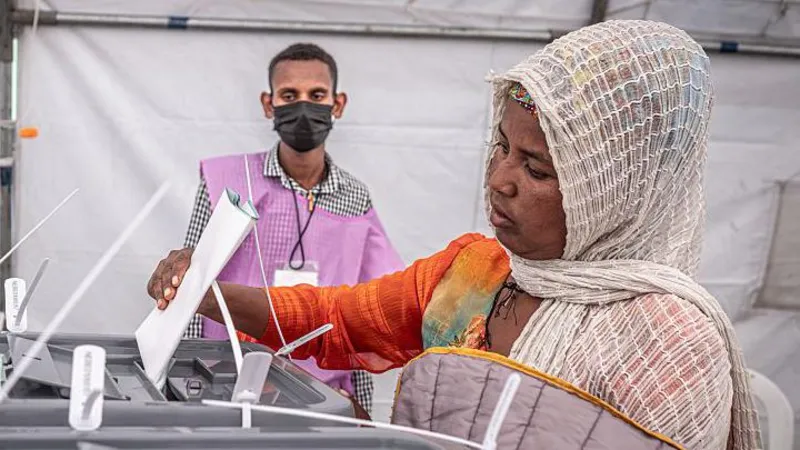
Despite this, many polling stations across the country remained open, and long queues of voters were seen in several areas.
Security disruption affects polling stations
Out of more than 50,000 polling stations set up for the election, 143 did not open due to security problems. Conflict in several regions continues to affect voter access and participation.
The northern Tigray region was fully excluded from the vote. The area is still recovering from a civil war that ended in 2022, which has left lasting instability.
Political context and voter participation
This election marks the seventh national vote since the fall of the military government in 1991. It is also taking place under tight media restrictions, limiting international coverage and reporting access.
Prime Minister Abiy Ahmed, who has led the country since 2018, cast his vote and highlighted national progress since the end of military rule. He said Ethiopians are capable of shaping their own democratic system without outside guidance.
Kenya’s former president Uhuru Kenyatta observed the election on behalf of the African Union and reported that voting appeared to be running smoothly in many locations.
Expected outcome and political landscape
Abiy Ahmed is widely expected to remain in power with his Prosperity Party. The system selects members for a 547 seat parliament. The party that wins at least 274 seats gains the ability to form the government for the next five years.
Abiy came to power after major protests against the Ethiopian People’s Revolutionary Democratic Front, a coalition that had governed since 1991. He later replaced it with the Prosperity Party, shifting the country toward a more centralized political structure.