
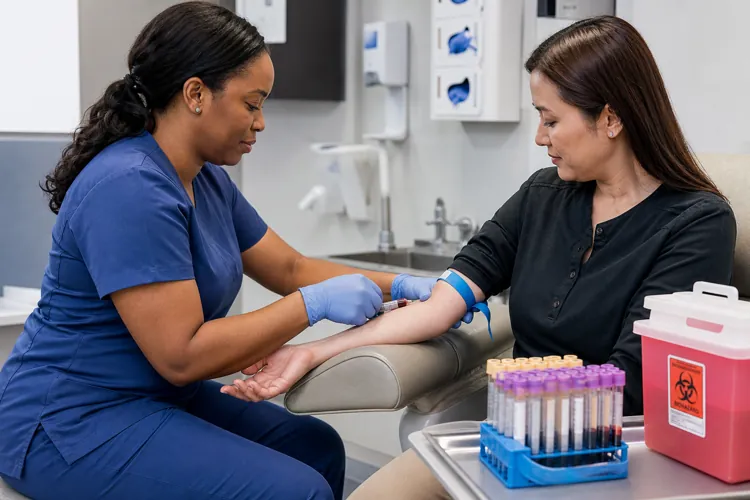
GRAIL’s Galleri blood test has moved closer to possible U.S. Food and Drug Administration approval after an FDA advisory panel reviewed evidence on its safety, effectiveness and overall benefit risk profile.
The panel voted unanimously that the test was reasonably safe. Members voted 6 to 4 that there was reasonable assurance of effectiveness. They also voted 7 to 2, with one abstention, that the benefits outweighed the risks. The FDA has not approved Galleri yet, and the agency will make the final decision.
Quick Fact
| Detail | Information |
|---|---|
| What happened | An FDA advisory panel reviewed GRAIL’s Galleri cancer blood test. |
| When | September 23, 2026 |
| Test | Galleri multi cancer early detection blood test |
| Safety vote | 10 to 0 in favor |
| Effectiveness vote | 6 to 4 in favor |
| Benefit risk vote | 7 to 2 in favor, with 1 abstention |
| FDA approval | Not granted yet |
| What Galleri does | Looks for cancer related signals in blood and estimates where they may have originated. |
| Important point | Galleri is intended to supplement, not replace, recommended cancer screening. |
FDA Panel Reviews Galleri Cancer Blood Test
Galleri is a multi cancer early detection test developed by GRAIL. It analyzes cell free DNA from a blood sample and looks for methylation patterns linked to cancer. The test also attempts to identify where a detected cancer signal may have started.
The FDA panel reviewed GRAIL’s premarket approval application on September 23. The committee considered three main questions about safety, effectiveness and the balance between benefits and risks.
The safety vote received unanimous support. Effectiveness drew a narrower vote of 6 to 4. The benefit risk question received 7 votes in favor, 2 against and 1 abstention. These votes provide advice to the FDA, but they do not amount to approval.
Galleri Is Designed to Detect Multiple Cancers
Traditional screening tests usually focus on specific cancers. Galleri takes a different approach.
The test looks for biological signals that may indicate cancer in the body. It can then provide an estimate of the tissue or organ where the signal originated.
GRAIL says Galleri is intended to work alongside recommended cancer screening. It is not designed to replace mammograms, colonoscopies or other established screening methods.
PATHFINDER 2 Produced Additional Evidence
The study included 35,878 participants. Researchers evaluated Galleri alongside standard cancer screening. GRAIL reported that more than two thirds of cancers detected by Galleri were found at stages I through III.
NHS Galleri Trial Raises Important Questions
The NHS Galleri trial included about 143,000 adults aged 50 to 77 in England. The randomized trial tested whether annual Galleri screening could reduce diagnoses of stage III and stage IV cancers.
The trial did not meet its main goal. Researchers found no statistically significant reduction in the combined number of stage III and stage IV cancers.
The study did produce other findings. Stage IV diagnoses among 12 specified cancer types fell by 22% during the second screening round and 26% during the third round. Researchers also reported more early stage cancer diagnoses among people who received the test.
Finding more cancers at an earlier stage can sound promising. However, screening researchers also need to determine whether earlier detection improves long term outcomes.
Galleri can miss some cancers, especially cancers at very early stages. A negative result therefore cannot guarantee that someone does not have cancer.
A positive result also does not confirm cancer. Doctors need additional tests to determine whether cancer is present. That process can include imaging or other diagnostic procedures.
Galleri Cancer Test Nears Decision
Galleri has reached a significant point in its FDA review. The advisory panel supported its safety and gave narrower support to its effectiveness.
At the same time, clinical questions remain. The NHS Galleri trial did not meet its primary endpoint, while other findings showed reductions in some stage IV diagnoses and increases in early stage cancer detection.
The FDA’s final decision will determine whether Galleri receives formal approval for its proposed use in adults aged 50 and older.