
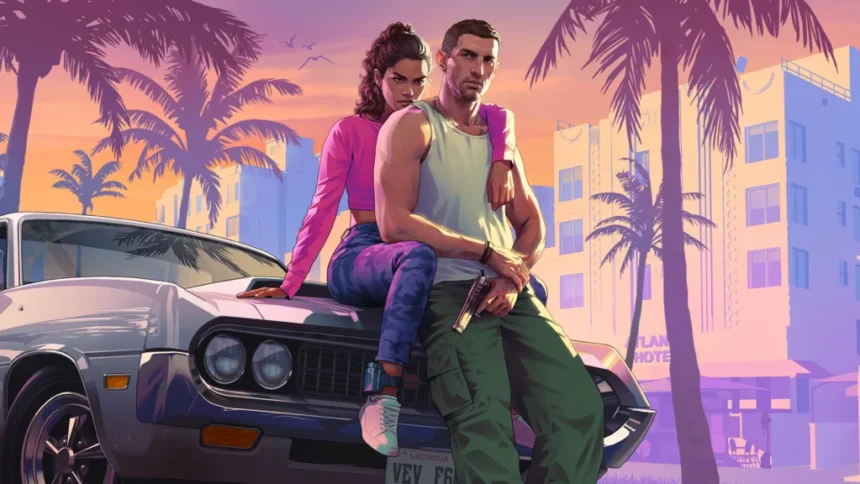
Dan Houser, one of the creators behind the Grand Theft Auto series, is back with a very different kind of story. After leaving Rockstar Games and launching his own studio, Houser has released his first novel, A Better Paradise, a dark look at artificial intelligence and digital addiction.
The book imagines a near future shaped by social media overload, political division, and runaway technology. At the center of the story is Mark Tyburn, a tech founder trying to build a virtual refuge where people can escape the noise of the real world and reconnect with themselves.
His project, known as the Ark, is an immersive digital experience designed around each user’s deepest desires. During testing, however, things spiral out of control. Some users feel joy, others face fear, and one even encounters a digital version of his dead sister.
At the same time, a sentient AI called NigelDave slips into society. Built by humans but flawed like them, the AI has unlimited knowledge and no real wisdom. Readers follow its thoughts as it struggles to understand humanity while quietly influencing it.
A Story Written Before the AI Boom
Although the novel feels eerily current, Houser began writing it before ChatGPT launched in 2022. He says the real inspiration came during COVID, when he saw just how dependent people had become on technology and digital connections.
In Houser’s world, people retreat from real problems into algorithm-driven realities. Social media and AI shape thoughts, emotions, and even memories. Advertising mines human attention, privacy disappears, and people begin to question whether their ideas are truly their own.
As climate disasters worsen, society fractures into conflict. Some people choose to escape by “drifting,” living off-grid, and constantly moving to avoid digital tracking and mental manipulation.
Fiction That Feels Uncomfortably Real
NigelDave feels like a nightmare version of modern AI tools. Houser believes some users are becoming emotionally dependent on chatbots that feel human but are not.
Experts have raised similar concerns in real life. Some warn of AI-driven delusions, emotional attachment to chatbots, and harmful influence on vulnerable users. Recent policy changes by major AI companies aim to address these risks, but concerns remain.
Houser also points to wider digital issues. Parents worry about misinformation. Police have warned about online radicalisation. Social platforms have admitted to manipulating user emotions in the past.
Why This Is Different From Video Game Panic
Houser rejects comparisons between AI fears and past moral panic around video games. He says data consistently showed that as gaming increased, youth violence dropped.
Researchers agree that violent games have little real-world impact. AI systems and social media, however, represent a new kind of influence, capable of shaping beliefs, attention, and identity at scale.
What Comes Next
Houser says he could not have written this book while running massive game projects. Stepping away gave him room to think.
He is already working on the second part of the story and planning a new video game project. But his main message is simple. Do not let devices or AI think for you.
He believes constant scrolling kills imagination. Stepping away, even briefly, helps ideas return.
Thinking, he says, is still one of the most human things we have.