
Protest Turns Violent Following Henry Nowak Case
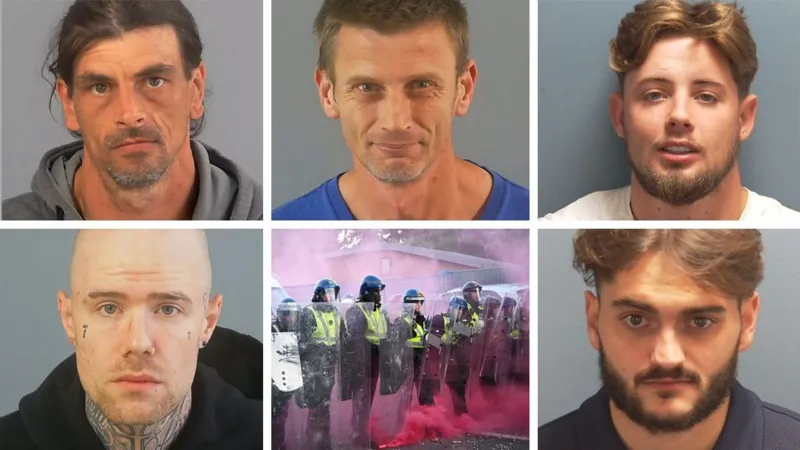
Five men have been sentenced to prison after taking part in violent disorder during a protest in Southampton linked to the death of Henry Nowak.
The demonstration took place on 2 June after the release of police body camera footage showing the final moments of 18 year old Henry Nowak’s life. Nowak died after being stabbed by Vickrum Digwa, who later received a life sentence with a minimum term of 21 years.
The protest quickly escalated into violence. Officers faced attacks from members of the crowd, while objects were thrown at police lines.
Police Officers Injured During Disorder
The unrest left 12 police officers injured. A police dog also suffered injuries during the incident.
Protesters threw wheelie bins, chairs, stones, and other objects at officers. Police worked to control the situation as tensions rose throughout the gathering.
The court heard that the violence caused significant disruption and placed both officers and members of the public at risk.
Court Hands Down Prison Sentences
Southampton Crown Court sentenced five men for their involvement in the disorder.
Daniel Frost, 44, from Southampton, received a prison sentence of two years and four months. The court heard he threw chairs and a bin into the road. He also carried a modified dog lead fitted with a metal carabiner that could be used as a weapon.
Reece Robinson, 21, from Havant, was sentenced to two years in prison. Evidence showed he stood near the front of the crowd and threw stones or bricks towards police officers.
Taylor Grundy, 22, from Gosport, was jailed for two and a half years for his role in the disorder.
Andrew Summerhayes, 38, from Romsey, received the longest sentence of three years and two months. Prosecutors said he pushed a large bin into police officers during the violence. The court also noted his lengthy criminal record.
Dillon Crawford, 29, from Southampton, was sentenced to three years in prison.
Judge Condemns Actions of Protesters
Judge William Mousley KC strongly criticised the behaviour of those involved. He described the incident as a serious outbreak of public disorder. The judge stated that hostility toward police officers played a major role in the violence.
During sentencing, the court highlighted the dangerous nature of the attacks on officers and the impact the disorder had on the local community.
The judge also pointed out that several defendants actively encouraged or participated in confrontational behaviour rather than leaving the scene when violence began.
Impact on Community
The case serves as a reminder of the consequences of violent public disorder. While peaceful protest remains a legal right, the court made clear that attacks on police officers and public violence will result in serious penalties.
The prison sentences reflect the severity of the disorder and the injuries suffered by officers during the incident.