France and Spain Wildfire Crisis
Wildfires are raging throughout France and Spain, causing over 300,000 people to flee their homes.
France has burned more land than any other year this century. While officials in Spain’s capital, Madrid, believe the flames are the worst the region has ever seen.
It follows a scorching summer of heatwaves across Europe, with temperatures rising beyond 40 degrees Celsius (104 degrees Fahrenheit) in several areas.
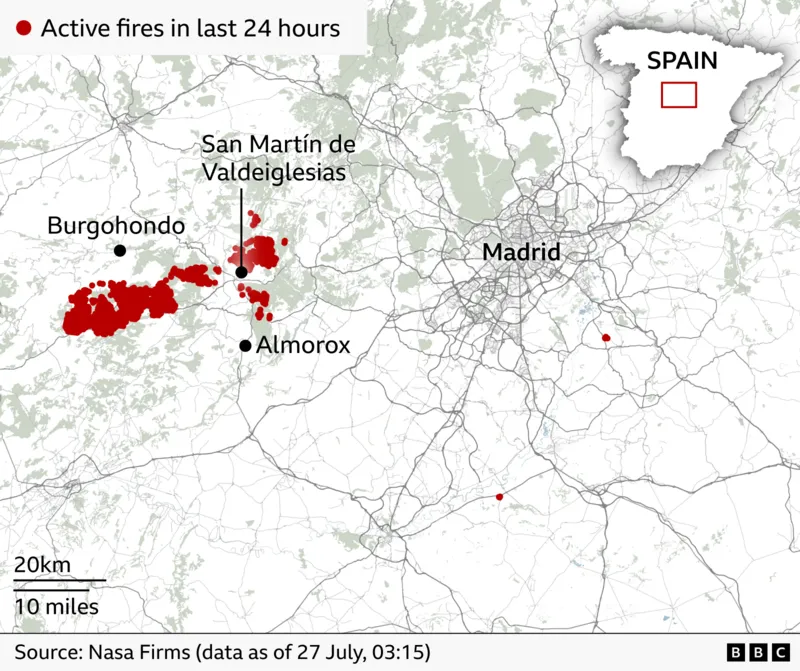
One of the most severely hit places is Gironde, in the French city of Bordeaux, where over 200,000 people have been displaced from their homes.
The fire has expanded quickly, eating through forests and farms in France’s famed wine region.
Consuming more than 162 square miles (420 square kilometers) in less than four days – an area approximately four times the size of Paris.
The fires have also threatened a number of sensitive military and industrial sites in the area. They including facilities for French ballistic missiles, rocket motors, and hazardous chemical processing.
Rare Fire Storms Emerge in France
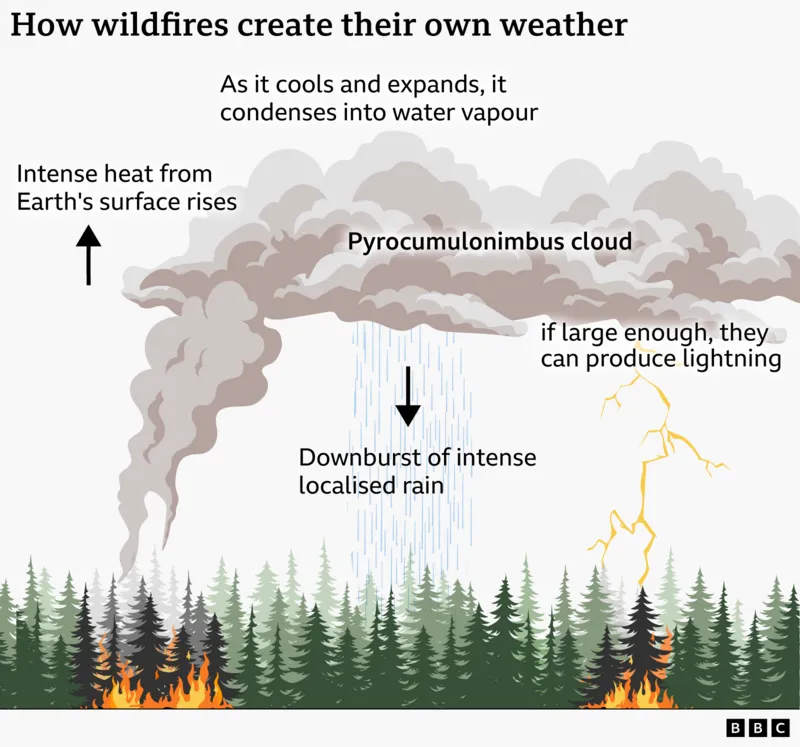
The fires have gotten so severe that they have spawned their own massive firestorm.
Storms like this are an uncommon meteorological occurrence that occurs. When the heat from wildfires causes the air above the fire to rise fast, sending smoke, and water vapor into the atmosphere.
As the air rises, it cools, and water vapour condenses to form a cloud. If the fire is big enough and the environment is unstable. The cloud can develop into a cumulonimbus, which is the same sort of cloud associated with thunderstorms.
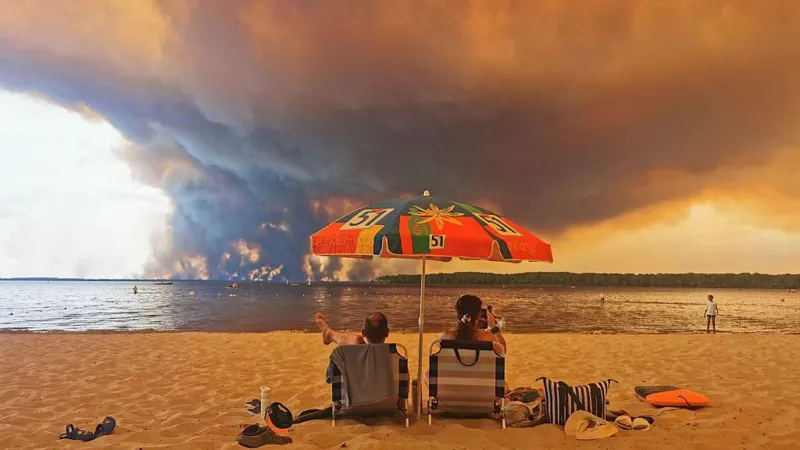
France Deploys Firefighting Aircraft
If these clouds get large enough, they can generate their own lightning, which can then ignite fresh flames. They can also sometimes bring hail and rain.
These harsh and unexpected circumstances exacerbate the difficulty of putting out flames.
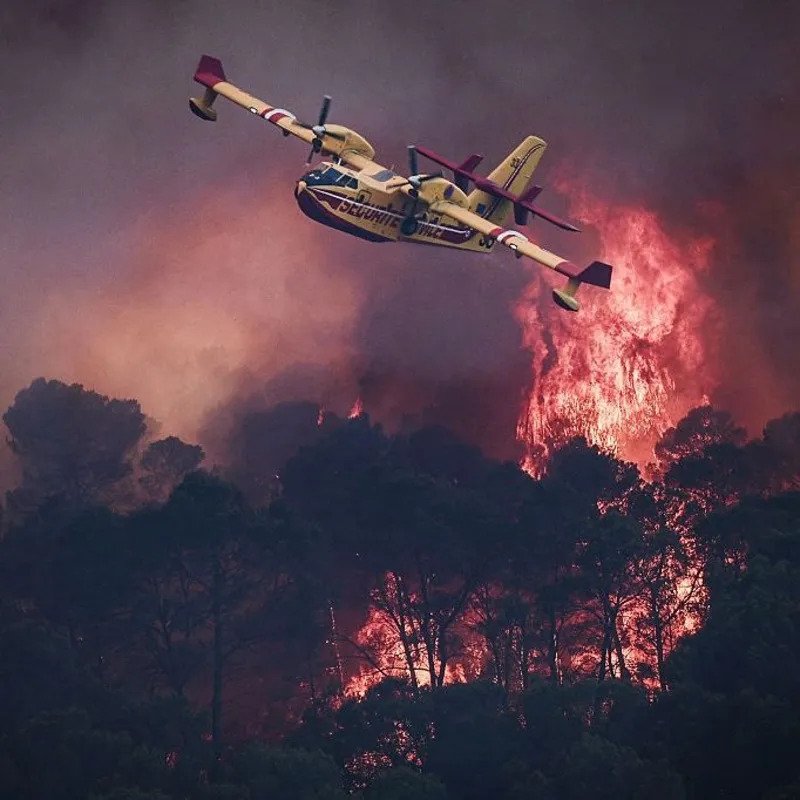
To tackle them, French firemen have used planes equipped with fire retardant, as well as planes such as the Canadair, which can collect 6,000 liters of water from lakes or the sea in 12 seconds and dump it straight on the fire.
On risky days, loaded aircraft scan high-risk regions before any flames are recorded, allowing them to deploy within minutes after a detection. Planes frequently fly in a continuous shuttle as retardant is applied along the edges.