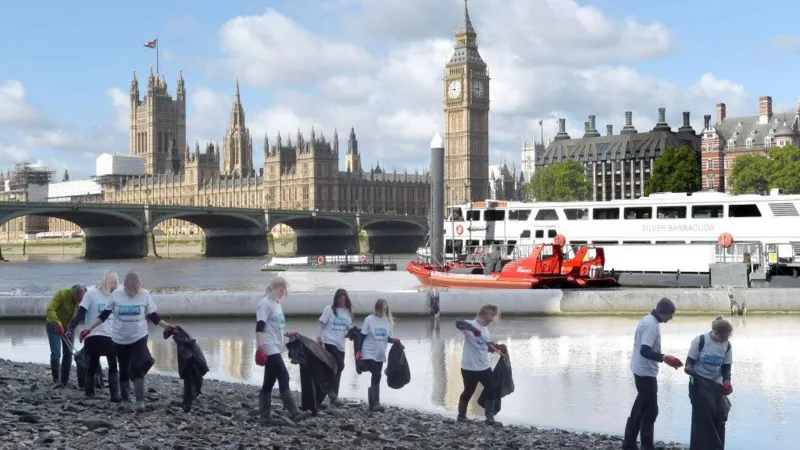
The River Thames has changed a lot over the years. Back in the 1950s, people called it “biologically dead” because factories were dumping so much pollution into the water. But now, it’s slowly coming back to life. Wildlife is returning, the water is getting cleaner, and the riverside areas are looking healthier than they have in decades.
You can spot harbour porpoises swimming in the estuary, and wading birds are nesting along the riverbanks. The Thames is becoming a much better home for all kinds of animals. Still, experts warn that climate change, ongoing pollution, and rising water levels could threaten the progress that’s been made.
Recently, the London Zoological Society, or ZSL, released its latest checkup on the river. They looked at 21 different indicators to see how healthy the Thames really is. The news is encouraging: toxic metals in the water are down, oxygen levels for fish and other creatures are up, and new habitats are forming along the banks.
Rules and regulations are also helping. Plastic cotton bud sticks, which used to be everywhere in the river, have almost disappeared since the UK banned them in 2022. Conservationists hope to see the same results with plastic wet wipes, which are also set to be banned later this year.
Levels of copper and zinc have fallen too. Zinc is now half of what it was in 1990, and copper has dropped to a quarter of its previous levels. That’s really good news for the fish, plants, and birds that rely on the river.
Alison Debney, who leads UK nature recovery at ZSL, said, “The Thames shows us change is possible.” It’s amazing to think this river was once considered biologically dead and now is full of life. It’s proof that taking action really makes a difference. These wins are worth celebrating—but we still need to protect the river for the future.
There are still challenges ahead. Since 2007, London’s summer water temperatures have gone up by about 0. It’s warming at 1.3 degrees Celsius each decade, and water levels by Tower Bridge have risen roughly 5 millimeters every year since 1993. Rising waters can make inland areas saltier, which is dangerous for freshwater habitats. Nitrate levels are also increasing in the Thames and its offshoots, like the Rivers Lee and Darent. This could upset the river’s delicate ecosystem balance.