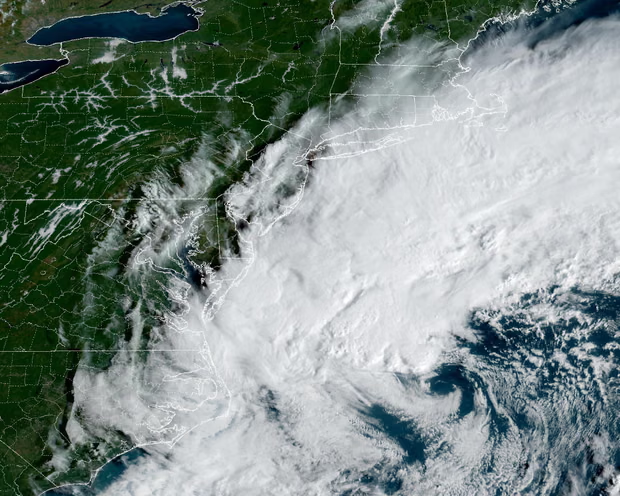
A “significant” nor’easter, the first of its kind in the fall, was starting to pummel New England on Friday with strong gusts and a lot of rain, threatening to ruin millions of people’s weekend plans.
As a record-breaking El Niño continued to intensify extreme weather occurrences worldwide, three distinct hurricanes, one of which threatened “catastrophic flooding,” including potentially fatal flash floods in Hawaii, were churning in the Pacific Ocean.
Quiet Fact
| Detail | Information |
|---|---|
| Weather Event | Powerful New England Nor’easter |
| Location | New England, Hawaii and Mexico |
| Date | September 25, 2026 |
| People Affected | Up to 40 million people potentially affected |
| Pacific Hurricanes | Nolo, Odalys and Polo |
| Main Threats | Heavy rain, strong winds, flooding and coastal erosion |
| Weather Conditions | Strong El Niño influencing global weather patterns |
| Expected Impact | Travel disruptions, power outages and possible flooding |
Nor’easter Threatens Millions in Northeast
The early-season northeasterly storm that was already battering coastal portions of Rhode Island, Massachusetts, Connecticut, and New York’s Long Island by Friday morning could affect up to 40 million people across many US states, according to forecasters.
The National Weather Service’s Boston office cautioned in a post on X that “strong winds and rough seas along with a prolonged period of steady rain across the region are expected through this weekend,” adding that the rain might continue until Monday.
“Our primary concerns are beach erosion, coastal flooding, and wind damage, including downed limbs and power outages.”
Nor’easter Brings Hurricane Force Winds
Although its exact path is unknown, areas further inland were also preparing for the storm’s arrival, which could bring hurricane-force winds.
According to the online AccuWeather service, winds of up to 80 mph were predicted in and near Montauk, New York, and between 40 and 60 mph along the coast from New Jersey to Maine starting late Friday.
The nor’easter is predicted to remain nearer the coast because it has gotten stronger over the Atlantic. According to a statement from Elizabeth Danco, an AccuWeather expert meteorologist, “this will bring more rain inland, but more importantly stronger winds closer to shore.”
“This area is especially vulnerable to falling trees and flooding due to the recent heavy rains.”
Travelers were advised to anticipate severe flight cancelations and delays, as well as challenging driving conditions, even though the worst effects, particularly floods and coastal erosion, will happen closer to the coast.
Some parts of southeast Massachusetts were predicted to receive up to 8 inches of rain, Boston to receive up to 2 inches on Friday and Saturday, and New York City to receive the same amount the next day. On Friday morning, Boston and surrounding areas were under a high wind warning.
Early Nor’easter Raises Weather Concerns
The Weather Channel stated on their website that “New York City and especially Boston need to stay weather aware this weekend and prepare the same as you would for a tropical storm.”
The Nor’easter’s presence so early in the season was another topic covered. “You may believe that it is too early for a nor’easter, but the requirements are met more frequently than you would think,” the Weather Channel stated.
There are also extreme weather events in the Pacific.
Pacific Hurricanes Threaten Coastal Areas
Polo remained offshore of Mexico on Friday, some 250 miles south-south-west of the Jalisco coast. Earlier this week, Polo quickly strengthened from a tropical storm to a category 5 monster hurricane. According to the National Hurricane Center in Miami, its 160 mph winds “are likely to cause life-threatening surf, rip currents, and coastal flooding” in the area.
For the first time since 1914, no hurricanes formed in the Atlantic by September 21 due to El Niño, which has caused 18 named storms in the Pacific basin this season. Both seasons end on November 30.