
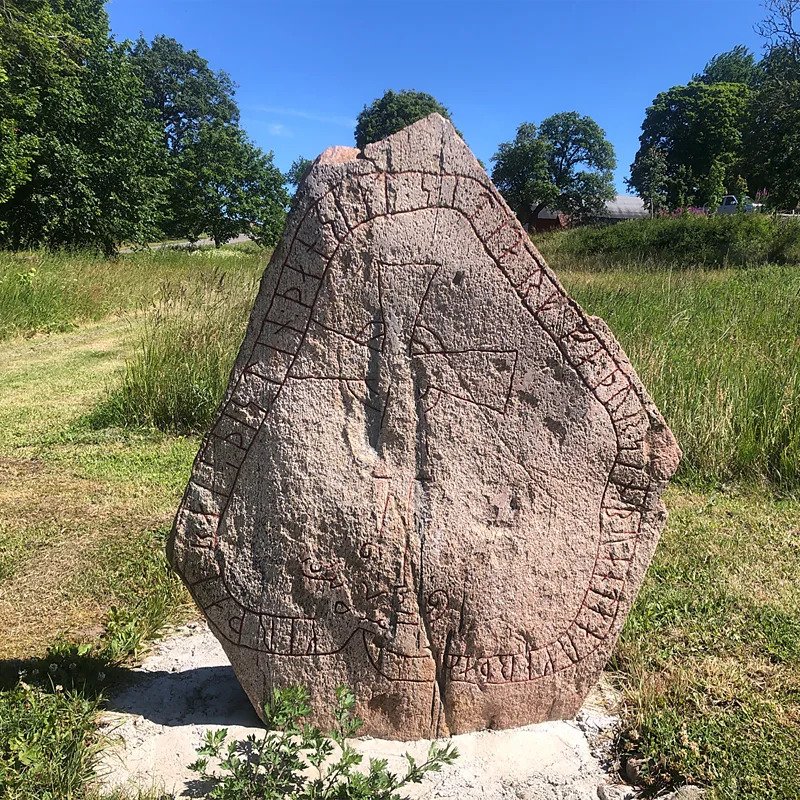
Runic inscriptions from the Viking Age continue to surface across Sweden, offering glimpses into lives lived more than 1,000 years ago. These ancient writings reveal personal messages, memorials, and even playful riddles, proving that the Vikings were not just warriors but storytellers and jokers.
Discovery of a Rune Stone Near Stockholm
A few years ago, Swedish rune expert Magnus Källström visited a farm south of Stockholm. A farmer had uncovered a stone while preparing to use it as a doorstep. When turned over, the slab revealed rows of ancient runes.
Reading aloud, Källström deciphered: “Gärder erected this stone in memory of Sigdjärv his father, Ögärd’s husband.” The message had gone unread for almost a millennium.
Rune Stones in Everyday Life
Finding rune stones by accident is not unusual in Sweden and other Scandinavian countries. They often appear during construction projects, roadworks, or plowing fields. Some stones, like a 2,000-year-old example discovered in Norway in 2023, date back to the earliest days of runic writing.
For many Swedes, rune stones are part of the landscape. They dot fields, roundabouts, and industrial areas. Roadside heritage signs often highlight their presence. Though familiar, these stones still hold mysteries and stories yet to be uncovered.
The Origins of Runes
The word “rune” comes from the Old Norse rún, meaning secret. Vikings used runes to capture northern European languages, including Old Norse. The script evolved from influences like the Latin alphabet, which traders and travelers encountered in southern Europe.
Runes were carved on wood, bone, stone, and even tools. One 11th-century textile tool found outside Gothenburg reads: “Do you think of me, I think of you, do you love me, I love you.” Stone inscriptions were the most durable and visible form. Some runes even appear on cliffs.
Rune Stones as Memorials and Messages
Rune stones often served as memorials, placed along roads, fords, or council sites to be seen by the public. They became especially popular during the Viking Age (800-1050 AD) and are sometimes called the social media of the time.
Commissioning a rune stone was costly, often requiring a skilled carver. During the spread of Christianity, many stones included prayers or crosses.
Runes for Fun and Jokes
Not all runes were serious. Vikings also used them for humor. Källström mentions “riddle bones,” where messages change when the object is rotated. Examples include instructions like “decipher this” or playful phrases such as “tasty beer.” These show that Vikings enjoyed puzzles and social games.
Rune stones remain a bridge to the past. They offer insights into Viking life, from love and loss to faith and humor. Every discovery adds a new chapter to their story.