
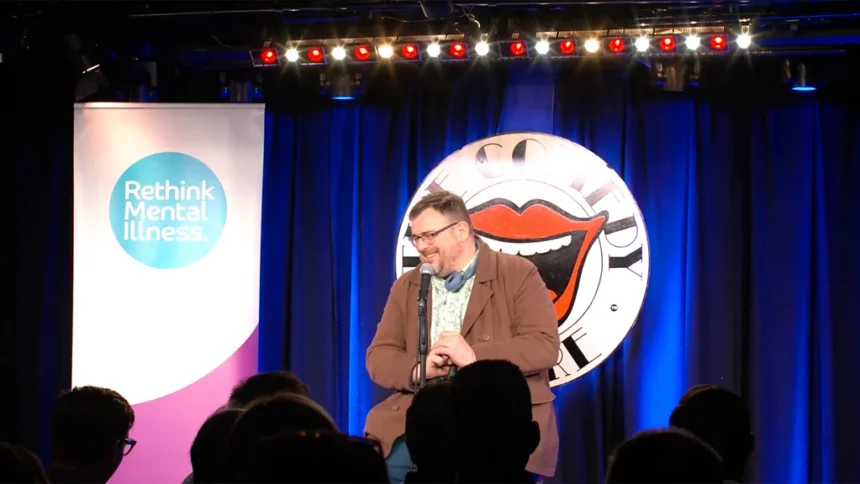
In the UK, mental health support is taking an unexpected but powerful turn. Doctors and therapists are now introducing people to stand-up comedy as part of social prescribing, and the results are encouraging.
Mohan Gupta never imagined himself performing comedy. Born in India and educated in the UK, he trained as an engineer and later became a monk. Life changed after he suffered a severe nervous breakdown. Alongside medication and hospital care, his doctors recommended something unusual: a stand-up comedy course.
This idea is rooted in growing evidence that laughter doesn’t just feel good, it actively supports mental and physical health. While watching comedy helps, research suggests that creating humour, especially in group settings, can have even stronger benefits for mental wellbeing.
Comedy as a Social Prescription
Comedy on Referral is a 10-week programme launched in 2020 and funded through the NHS. Participants learn to write and perform a 10-minute stand-up routine based on their own life experiences. Gupta, who was diagnosed with paranoid schizophrenia, credits the course with helping him reconnect with others and rebuild confidence.
The programme’s creator, comedian Angie Belcher, believes comedy often comes from pain. She encourages participants to explore difficult life moments, such as trauma, loss, or addiction, and find a way to speak about them honestly, without minimizing their seriousness. Turning pain into humour, she explains, helps people move forward rather than remain stuck.
Why Laughter Heals
Laughter has been part of human survival for thousands of years. Researchers note that humour has long been used to reduce tension, strengthen bonds, and signal safety within groups. From ancient civilisations to modern psychology, laughter consistently appears as a tool for resilience.
Scientific studies back this up. Laughter has been shown to lower stress hormones like cortisol, increase endorphins, improve mood, and even support heart and lung function. Some research also suggests humour helps people reframe stressful situations, making challenges feel more manageable.
Importantly, group laughter creates connection. Shared vulnerability and collective humour reduce isolation, which is a key factor in many mental health struggles.
Stand-Up Comedy and Mental Wellbeing
For participants like Ryan Moore, a football coach recovering from addiction, the course offered more relief than traditional therapy alone. Initially sceptical, he soon realised that everyone in the group carried emotional pain. Sharing it through comedy helped him let go of shame and build genuine friendships.
Clinical psychologists involved in evaluating the programme found that humour allowed participants to talk openly about their experiences without feeling overwhelmed. Framing the sessions as comedy rather than therapy made the process more accessible, particularly for men who might otherwise avoid mental health support.
A Growing Movement
With mental health challenges rising across England, the NHS has expanded its investment in social prescribing. Creative activities like comedy are now recognised for reducing stress, improving social connection, and supporting long-term wellbeing.
Although demand for comedy-on-prescription programmes is high, experts encourage people to use humour in daily life whenever possible. Sharing jokes, noticing small moments of joy, or laughing with others can all help build emotional resilience.
Sometimes, laughter really can be part of the medicine.