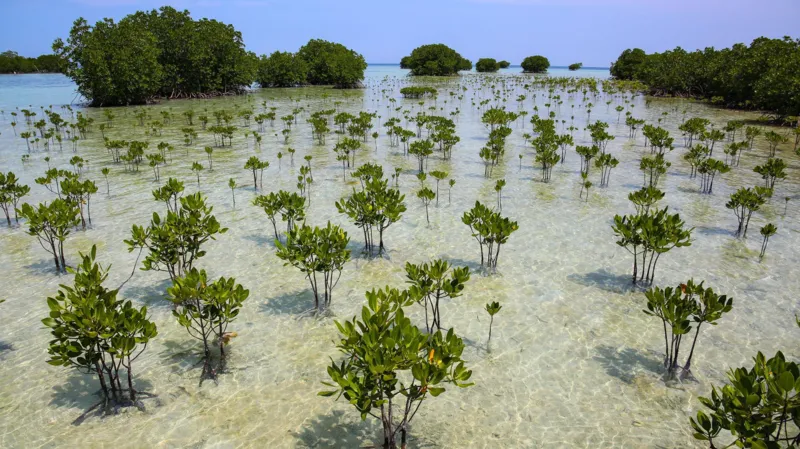
The world’s mangrove forests are making an impressive comeback after decades of decline. Scientists have found that since 2010, more mangroves have grown back than have been lost. This positive shift highlights the success of conservation efforts and the natural ability of these forests to recover when people stop clearing them.
Mangroves Are Recovering Across the Globe
For many years, mangrove forests faced severe destruction. Developers cleared large areas to build fish farms, agricultural projects, housing developments, and coastal infrastructure. As a result, thousands of square kilometers of mangrove habitat disappeared across Asia, Africa, and the Americas.
However, recent research shows a significant change. Since 2010, global mangrove gains have exceeded losses. Improved environmental laws, restoration projects, and growing public awareness have all contributed to this recovery.
Natural Regeneration Plays a Key Role
Researchers believe the biggest reason behind the recovery is the remarkable ability of mangroves to regenerate naturally. Once human activities stop damaging these ecosystems, young mangrove trees can quickly establish themselves and expand.
This natural regrowth has helped restore many coastal areas without requiring extensive human intervention. Scientists say protecting existing mangroves often delivers better results than large scale planting programs alone.
Lessons Learned From Natural Disasters
Major natural disasters have also increased awareness about the importance of mangrove forests. The 2004 Indian Ocean tsunami demonstrated how mangroves can reduce the impact of powerful waves and protect coastal communities.
Since then, governments and local communities have invested more effort in preserving and restoring these valuable ecosystems. Many coastal regions now recognize mangroves as a natural defense against storms, flooding, and erosion.
Why Mangroves Matter
Mangroves provide several environmental and economic benefits. They absorb and store large amounts of carbon dioxide, helping fight climate change. In fact, they can store up to five times more carbon than many land based forests.
Their dense root systems also stabilize coastlines and reduce the force of storm surges. At the same time, these roots create safe breeding grounds for fish, crabs, and other marine species. Healthy mangrove forests support biodiversity and strengthen local fishing industries.
A Dramatic Turnaround
Between the 1980s and 2010, the world lost more than 12,000 square kilometers of mangrove forests. That area is roughly the size of Jamaica. Today, scientists report that net losses have fallen dramatically to approximately 849 square kilometers.
This improvement shows that conservation policies can deliver real results when governments, organizations, and communities work together.
Looking Ahead
Although the recovery is encouraging, experts warn that mangroves still face threats from coastal development, pollution, and climate change. Continued protection remains essential to maintain recent gains.
The latest findings offer hope for the future. They demonstrate that nature can recover when given the opportunity. By protecting mangroves today, countries can strengthen coastal resilience, support wildlife, and contribute to global climate goals for generations to come.