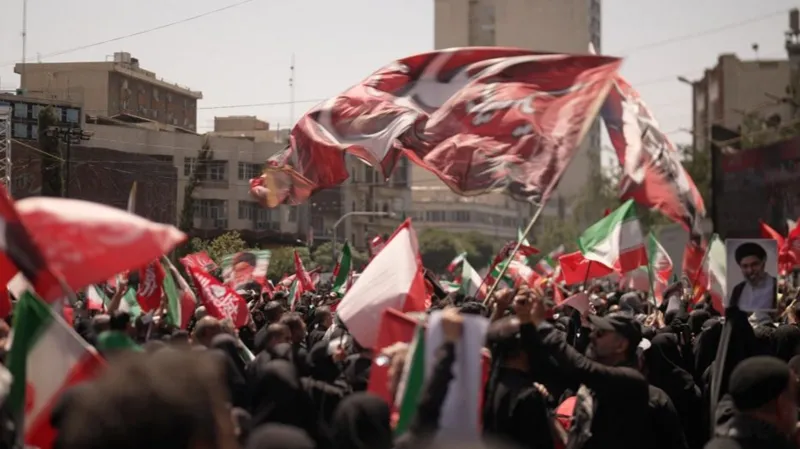
Iran concluded three days of national mourning with a massive funeral procession for Ayatollah Ali Khamenei in Tehran. Millions of mourners gathered to pay their final respects as the country’s leadership used the event to project unity, strength, and resilience during a period of political and economic uncertainty.
The funeral procession stretched across nearly 10 kilometers through the capital. The large crowd slowed the movement of the coffins carrying Khamenei and four members of his family. The gathering became one of the biggest public events seen in Iran in recent years.
A Carefully Planned Display of Unity
Monday’s funeral procession marked the most significant event of a week of memorial ceremonies. Iranian officials presented the farewell as a symbol of national solidarity and resistance against external pressure. Throughout the march, supporters chanted slogans expressing opposition to the United States and Israel while mourning the late supreme leader.
President Masoud Pezeshkian defended the emotional scenes witnessed during the funeral. He rejected claims that the public grief was staged and described the tears of mourners as a genuine expression of sorrow.
Not Everyone Joined the Procession
Although millions attended the funeral, many Iranians chose to stay away. Some citizens pointed to rising inflation, ongoing economic hardship, and the impact of recent conflicts as reasons for not participating.
Others continued to criticize Khamenei’s leadership, especially over the government’s response to nationwide protests earlier this year. Several residents said they remain frustrated by unemployment, financial struggles, and political tensions.
The differing reactions highlighted the divisions that continue to exist within Iranian society despite the scale of the public ceremony.
Funeral Events Continue at Holy Sites
The memorial ceremonies will now continue at several important religious locations. Events are scheduled in Qom before moving to the Shia holy cities of Najaf and Karbala in Iraq. Khamenei will finally be laid to rest on Thursday at the Imam Reza Shrine in Mashhad, his birthplace and one of Iran’s holiest cities.
Legacy Remains a Subject of Debate
Political analysts believe the funeral was designed to present Ayatollah Ali Khamenei as both a national leader and a respected religious figure whose influence reached across the Shia Muslim world.
However, opinions about his legacy remain deeply divided. Supporters credit him with preserving the Islamic Republic through decades of regional challenges. Critics argue that his leadership belonged to a political era that no longer reflects the realities facing modern Iran.
As Iran enters a new chapter following Khamenei’s death, questions remain about the country’s political direction, regional influence, and future stability.