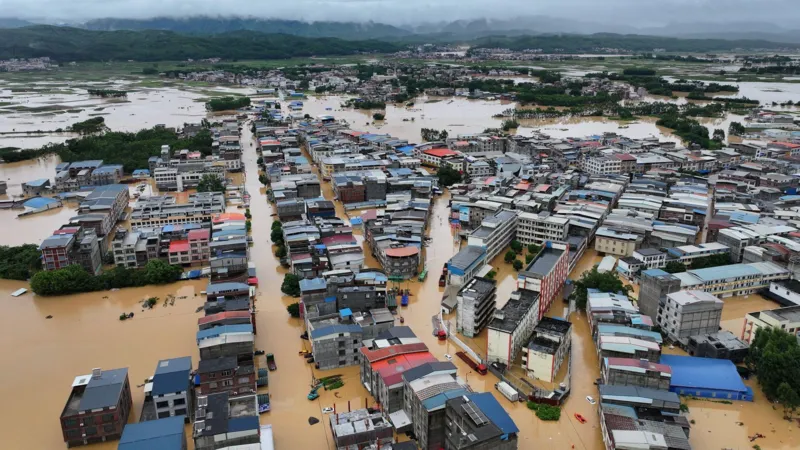
Fast Rising Floodwaters Force Villagers to Escape
Heavy rainfall from Typhoon Maysak caused severe flooding in Renhe village, located in Guangxi province, southern China. The rain started on Sunday, but residents did not expect the situation to become dangerous so quickly.
Within hours, rising water entered homes and covered streets. By early Monday morning, floodwater reached knee level. Later, it completely covered the first floors of many houses.
Residents said the water moved faster than expected. Many families escaped without taking food or important belongings because they had little time to react.
A local resident named Zhou said the flood arrived suddenly and forced villagers to leave their homes immediately.
Dam Damage and Rising River Levels Create Crisis
Typhoon Maysak caused rivers across Guangxi to overflow. The powerful storm also damaged dam walls, increasing the danger for nearby communities.
Thousands of people have left their homes as rescue teams continue operations in flooded areas. Several villages and parts of Nanning city faced serious water damage.
Some residents waited on rooftops and called for help as floodwater surrounded their homes.
Officials reported that the storm caused deaths and injuries across different regions. Rescue workers continue searching affected areas and providing emergency support.
Extreme Weather Spreads Across China
The storm also brought dangerous weather conditions to other parts of China. Hubei province experienced strong thunderstorms and rare tornado activity hundreds of kilometres away from Guangxi.
The severe weather damaged communities and disrupted daily life for many residents.
Chinese President Xi Jinping ordered emergency teams to increase rescue and relief operations. Authorities in Nanning warned that more heavy rain could make rescue work difficult.
Climate Concerns Increase After Severe Storm
Typhoons often bring heavy rainfall to China during this period of the year. However, experts say stronger extreme weather events have become a growing concern due to climate change.
China’s agriculture sector, worth trillions of dollars, faces increasing risks from floods, storms, and changing weather patterns.
Typhoon Maysak marks the first major storm to hit China during the 2026 typhoon season. Officials described the storm as sudden and powerful, with intense winds and short periods of extreme rainfall.
More Storm Threats Ahead
Weather experts are also monitoring another powerful storm, Super Typhoon Bavi, which could affect China’s eastern coastline later this week.
Authorities continue to prepare emergency plans as communities recover from the destruction caused by Typhoon Maysak.
The disaster highlights the growing need for stronger flood protection systems and faster emergency responses to protect people living in high risk areas.