Gen Z Slang Enters Parliament
One of India’s oldest institutions has finally adopted the language of the country’s youthful, always online populace.
India’s parliament found itself echoing the language of the demonstrators just days after Dharmendra Pradhan.
Until recently, those terms were exclusive to meme sites, group chats, and Instagram comment areas. Instead, they reverberated throughout the Lok Sabha, the lower house of parliament, on Tuesday.
Gen Z slang flowed freely around the room as MPs discussed a new anti-exam leak measure.
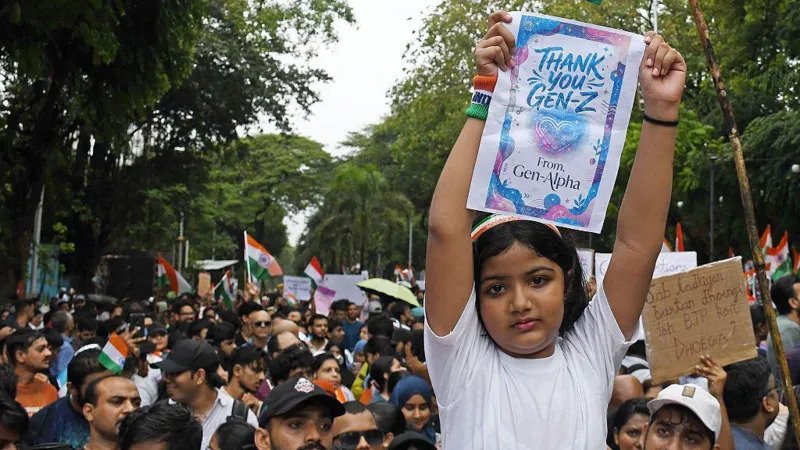
That the administration had presented following weeks of demonstrations spearheaded by the Cockroach Janta Party (CJP).
Shrikant Shinde of the Shiv Sena party accused the opposition of being “MIA” (absent in action), consumed by “FOMO” (fear of missing out), and ultimately turning into “delulu” (Gen Z abbreviation meaning divorced from reality).
Meanwhile, Congressman Deepender Singh Hooda made fun of the administration by using the widely used protest catchphrase “waste-guna-huiya”—a purposefully absurd meme made famous during the protests.
The vocabulary of the internet was also adopted by government legislators.
Gen Z Slang Dominates Parliament
Prime Minister Narendra Modi “clocked it” by introducing the bill, according to Bansuri Swaraj of the governing Bharatiya Janata Party (BJP), which is Gen Z slang for doing something right or seeing the answer.
Tejasvi Surya, a fellow member of parliament, blasted the opposition of being “delulu” for opposing the measure because they were unable to enact comparable reforms while in power.
Opposition leader Supriya Sule quickly left the debate to observe the ridiculousness of the situation across the aisle.
It was a strange moment. In addition to forcing the resignation of a cabinet member, an internet movement sparked by memes and Instagram clips appeared to be changing the tone of the next legislative debate.
Social Media Fuels Protests
The CJP started off as an online satirical collective. However, the outcry over purported exam irregularities quickly made.
It’s an odd focal point for more general complaints about government disinterest, failing institutions, and unemployment. It was also multilingual.
The movement resided on Instagram, was coordinated on Telegram, and was organized on WhatsApp. First-person vlogs, memes, sarcastic edits.
“fit checks” showing off your attire and “Get Ready With Me” videos all contributed to its political development. Within hours.
Protests turned into videos that garnered millions of views and encouraged more youth to go to the streets.
Modi Joins Digital Politics
The same platforms were increasingly used in the government’s reaction. As the demonstrations gained traction, Modi, whose political ascent has always been linked to social media, entered the online conflict with selfie-style films and direct appeals to youth.
Later, opposition MPs ridiculed some of those initiatives in parliament, claiming it was simpler to alter camera angles than to address the problems of students.
All of this may be seen as proof that Gen Z was suddenly discovered by Indian politics.
However, political scientist Rahul Verma of the Center for Policy Research advises against extrapolating too much from a single legislative discussion.
He claims that politicians have always used popular culture terminology.They know where their voters are located. They are responsible for that.
Pop Culture Meets Politics
The instances date back many years.
For a long time, popular films, advertising, and cricket have all been included into parliamentary speeches. Verma contends that while the vocabulary may be new, the underlying inclination is not.
He claims that rather than indicating a fundamental change in Indian politics, it may just be politicians attempting to speak the language of the people they want to win over, as they have always done.