Alibaba shares fell sharply in Hong Kong on Monday after the Chinese technology company launched a $10.2 billion share sale to finance its growing artificial intelligence business.
Alibaba plans to sell HK$80 billion of new shares at HK$112.70 each. The price represents an 8.4% discount to the previous closing price. Investors are weighing the funding needs against the risk of share dilution and the challenge of turning heavy AI spending into stronger returns.
Alibaba Launches $10.2 Billion AI Share Sale
Alibaba said it will issue about 710 million ordinary shares to raise money for AI chips, computing infrastructure and AI models. The new shares equal about 3.6% of the company’s enlarged share count.
Alibaba shares fell as much as 10.5% during Hong Kong trading before recovering some of the losses. The stock later traded close to the discounted offer price.
The deal attracted strong investor demand. Orders reached about $28 billion, including around $6 billion from long term investors and sovereign funds, according to people familiar with the matter.
About 40% of the shares are expected to go to long term and sovereign investors. The investors reportedly include Qatar Investment Authority, Norway’s Norges wealth fund and Hillhouse.
| Company | Alibaba |
| Share Sale | $10.2 billion |
| Amount Raised | HK$80 billion |
| Offer Price | HK$112.70 per share |
| Discount | 8.4% below Friday's closing price |
| New Shares | About 710 million |
| Share Dilution | About 3.6% of enlarged shares |
| Use of Funds | AI chips, infrastructure and AI models |
| Share Price Fall | Up to 10.5% in Hong Kong trading |
| Investor Orders | About $28 billion |
| Quarterly Net Profit | Down 75% year on year |
| Key AI Platform | Qwen AI models |
Artificial intelligence has become a major source of growth for Alibaba as its traditional e-commerce business faces slower growth.
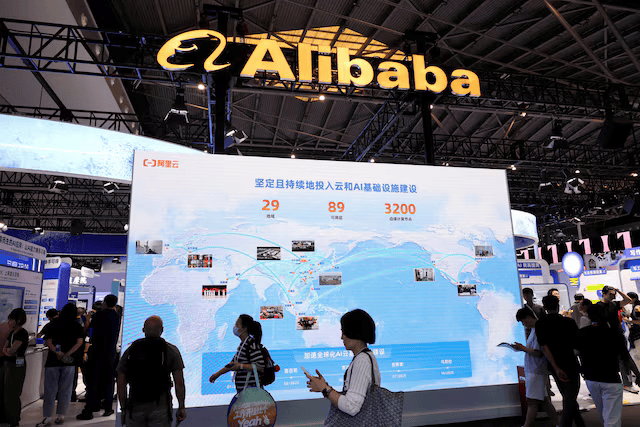
The company has invested heavily in AI models, computing systems and related infrastructure. Its Qwen family of AI models has also become one of the major AI platforms in China.
Alibaba said it has already committed almost half of its three year capital spending plan of 380 billion yuan. The company expects its AI computing investments to reach break even within three years, and possibly within two and a half years.
Chief Executive Eddie Wu has said the company expects better margins as its own chips replace some third party hardware.
Investors Remain Concerned About AI Spending
Despite strong demand for the share sale, some investors remain cautious about Alibaba’s ability to compete in advanced technology.
Yang Tingwu, vice general manager of Tongheng Investment, said:
“Alibaba’s DNA is in e commerce, not advanced tech.”
He added:
“No matter how much it invests in AI hardware, it will likely be outmaneuvered by competitors in tech innovation.”
The concerns come as Alibaba faces pressure to show that its large AI investments can generate sustainable returns.
Alibaba Faces a Wider AI Investment Race
Alibaba’s fundraising comes as technology companies in both China and the United States increase spending on AI.
According to Capital Group estimates cited in the source material, the biggest US hyperscalers had reached $791 billion in AI-related capital spending as of July 31.
Chinese companies also face restrictions on access to some of Nvidia’s most advanced AI chips. Those limits have encouraged companies in China to develop AI systems that use computing resources more efficiently.
Alibaba Cloud Growth Reaches 45%
Alibaba Profit Falls as AI Costs Rise
The share sale comes shortly after Alibaba reported a sharp fall in quarterly net profit.
The company’s net profit dropped 75% from a year earlier, with AI related spending contributing significantly to the decline.
Alibaba has also separated its AI operations from its cloud business this year. The new AI unit is led by Eddie Wu as the company expands its focus on AI models, infrastructure and AI agents.
Alibaba Faces Pressure After AI Funding
Alibaba now faces pressure to show that the new funding can translate into stronger AI capabilities and better financial returns.
The share sale gives the company significant capital for AI development, but investors will continue to watch spending, profitability and the performance of its AI products.
For Alibaba, the key challenge is not only raising money for artificial intelligence. It is proving that the investment can support long-term growth without putting excessive pressure on shareholders.
The next stage will depend on Alibaba’s ability to turn its large AI investments into sustainable growth and stronger returns.