Europe is facing a growing electronic waste problem while also trying to reduce its dependence on imported critical raw materials. Millions of discarded devices contain valuable metals and electronic components that could support future supply needs.
Electronic waste has grown sharply worldwide since 2010. Europe still recycles less than 20% of its electronic waste appropriately. Experts and industry projects are now calling for better recovery methods, product design and component reuse.
Quick Facts
| Detail | Information |
|---|---|
| What happened | Europe is examining ways to recover more critical materials and reusable components from electronic waste. |
| Where | Europe, with the CIRCUIT project based in Denmark. |
| When | August 24, 2026 |
| Who is involved | European policymakers, electronics manufacturers, waste operators and recycling technology companies. |
| Current status | Pilot projects are testing component recovery, circular design and lower temperature material recovery. |
| Why it matters | Better electronic waste recovery could reduce material waste and strengthen Europe’s supply security. |
Europe Turns E Waste Into Resources
Europe is looking at electronic waste as a potential source of critical raw materials.
The issue has become more important as demand for minerals rises. Europe also depends heavily on international supply chains for many important materials.
Global electronic waste has increased by 82% since 2010. However, Europe still recycles less than 20% of its electronic waste appropriately.
At the same time, China controls more than 90% of global rare earth processing. Export restrictions from raw material suppliers have also increased significantly since 2009.
These trends are creating pressure on Europe to find more domestic sources of materials.
How Europe Is Recovering E-Waste
The problem is not limited to the amount of electronic waste produced. Valuable materials can also be lost during conventional recycling.
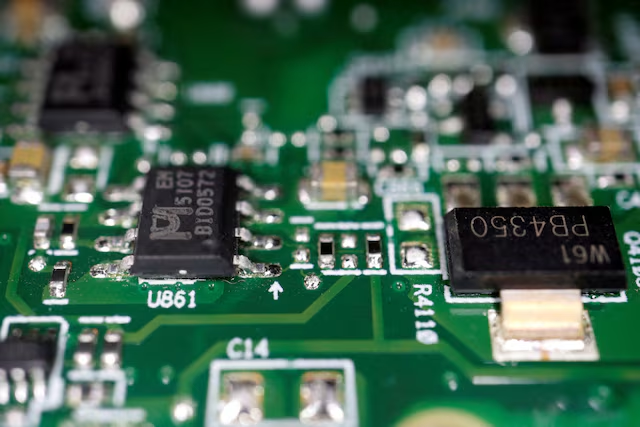
Printed circuit boards and electronic components can contain copper, gold, silver and other valuable materials. Some components may also contain critical materials used in modern technology.
Traditional high temperature recycling can recover certain metals. However, the process can destroy functional components that could otherwise support repairs or reuse.
The CIRCUIT project is examining another approach.
The project brings together six Danish companies from areas including electronics manufacturing, PCB production, waste management and recycling technology.
Researchers and industry partners are studying ways to remove electronic components safely. They are also looking at testing and quality control so recovered components can potentially return to use.
Europe has been working to reduce its dependence on imported critical raw materials.
The European Union’s Critical Raw Materials Act includes a target for 25% of EU consumption to come from recycled sources by 2030.
The EU is also moving toward product rules that encourage better repairability, upgradeability, and disassembly.
These changes could affect how manufacturers design future electronic products.
Why Electronic Waste Recovery Matters
Electronic waste could become an important secondary source of raw materials for Europe.
Recovering useful components could extend product lifespans and reduce the need for new manufacturing. It could also create new business opportunities for recycling companies and technology providers.
For manufacturers, recovered components could provide another source of supply. Companies could also use documented circular design and recovery practices to meet changing regulatory requirements.
Europe’s E Waste Recycling Future
The main challenge is scaling these technologies beyond pilot projects.
Europe will need suitable collection systems, recycling infrastructure, and economic incentives. Manufacturers will also need practical ways to design products that recyclers can repair, upgrade and dismantle.
The CIRCUIT project is testing how these ideas can work with real electronic waste streams.
Europe’s electronic waste crisis is also a potential supply opportunity. Discarded electronics already contain materials that European industries need.
The next challenge is turning promising pilot projects into systems that can operate at a much larger scale.