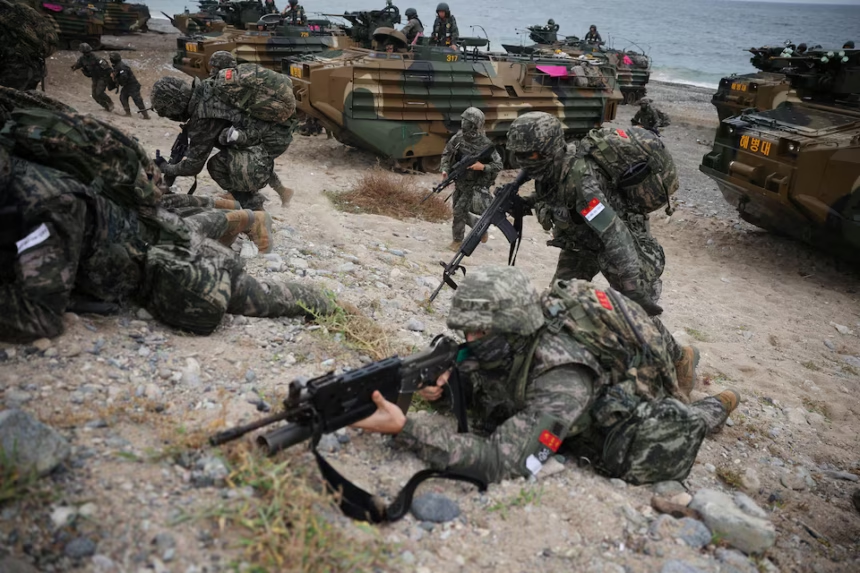
The United States has cancelled a joint amphibious landing exercise with South Korea scheduled for next month. Seoul’s Marine Corps said the US cited limited troop availability because of the war in Iran.
The cancelled Ssangyong exercise is a major military drill involving US and South Korean forces. The two allies are now discussing how to resume the training and address the lost exercise opportunity.
Quick Facts
| What happened | The US cancelled a joint amphibious landing drill with South Korea. |
|---|---|
| Where | South Korea |
| When | August 24, 2026 |
| Who is involved | US Marine Corps, South Korean Marine Corps, US and South Korean governments |
| Current status | The allies are discussing future training plans. |
| Why it matters | The cancellation affects joint military training and comes amid rising security concerns involving North Korea. |
The United States has cancelled the Ssangyong amphibious exercise planned with South Korea next month.
South Korea’s Marine Corps said the US Marine Corps notified its counterpart in June. Washington said the availability of US forces would be limited for the division level exercise.
The US cited military demands linked to the war in Iran. Those demands have affected the availability of American forces for planned training.
South Korean officials said both countries remain in close contact about future exercises. They have not announced a replacement date for the cancelled drill.
US South Korea Military Training Faces Changes
The Ssangyong exercise focuses on amphibious military operations. It involves US and South Korean forces working together in large scale training.
The South Korean Marine Corps confirmed the cancellation during a press briefing on Monday.
The US Forces Korea did not immediately respond to a request for comment.
Later on Monday, US Secretary of State Marco Rubio spoke with South Korean Foreign Minister Cho Hyun.
The US State Department said Rubio and Cho discussed several alliance issues. Rubio also stressed the need for close coordination between Washington and Seoul.
The cancellation follows another recent change to US South Korea military training.
Trump Reduces South Korea Military Drills
President Donald Trump recently ordered the Pentagon to reduce the scale of the annual Ulchi Freedom Shield exercise.
Trump cited the cost of the exercise and South Korea’s decision not to participate in the Iran war.
The decision came despite the long standing US military presence in South Korea.
Washington and Seoul regularly conduct joint exercises to improve coordination and military readiness.
North Korea strongly opposes these exercises. Pyongyang has repeatedly described them as preparations for an invasion.
Drill Cancellation Raises Military Readiness Concerns
The cancellation could affect joint military readiness between the United States and South Korea.
Regular exercises allow troops from both countries to practise working together. Amphibious training is particularly important because it involves complex operations between land, sea and air forces.
The timing also matters because North Korea remains active militarily.
North Korea fired 10 suspected short range ballistic missiles last week. Pyongyang also criticised the US South Korea military exercises.
The latest cancellation therefore raises questions about how the allies will maintain training while US forces face military demands in other regions.
US South Korea Drills Face Uncertain Future
The cancellation could affect joint military readiness between the United States and South Korea.
Regular exercises allow troops from both countries to practise working together. Amphibious training is particularly important because it involves complex operations between land, sea and air forces.
The timing also matters because North Korea remains active militarily.
North Korea fired 10 suspected short-range ballistic missiles last week. Pyongyang also criticized the US-South Korea military exercises.
The latest cancellation therefore raises questions about how the allies will maintain training while US forces face military demands in other regions.
Conclusion
The United States has cancelled a major amphibious exercise with South Korea because of limited US force availability linked to the Iran war.
The move comes after Washington also reduced another major joint exercise with Seoul. Meanwhile, North Korea continues its missile activity and criticism of allied military drills.