
The Nuclear Non-Proliferation Treaty (NPT) can no longer be used to handle Iran’s nuclear dilemma as a simply technical or legal matter.
The outcome is directly related to the future of the nonproliferation regime in the Middle East and beyond.
It has developed into a structural, geopolitical, and security-driven dilemma. Iran and the United States must shift from single-issue approaches to a comprehensive, direct, and gradual discussion if the negotiations set for Friday are to be successful and long-lasting.
Quick Fact
| Detail | Information |
|---|---|
| Main Issue | Iran’s Nuclear Programme |
| Key Countries | Iran, United States, and World Powers |
| Key Agreement | Joint Comprehensive Plan of Action (JCPOA) |
| Agreement Year | 2015 |
| International Agency | International Atomic Energy Agency (IAEA) |
| Main Concerns | Nuclear Nonproliferation, Disarmament, and Security |
| Why It Matters | International Stability and Nuclear Diplomacy |
the structure and location of the US-Iran discussions.
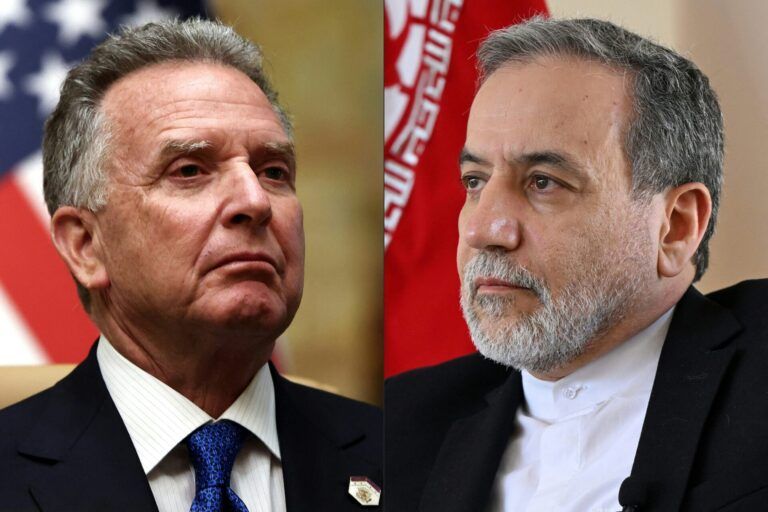
Iranian Foreign Minister Abbas Araghchi and US ambassador Steve Witkoff met for the first time on April 12, 2025, in Muscat, Oman. These talks were described as “indirect” at Iran’s demand.
I stressed in a tweet on April 8, 2025, that direct talks, especially in Tehran, would greatly improve the likelihood of coming to a respectable, practical, and timely deal.
“Neither country is interested in wasting time,” I insisted. The region suffered significant and unfortunate losses over the roughly ten months that were lost in spite of these warnings.
Toward Direct Diplomatic Engagement
It now seems that Tehran has consented to direct negotiations between Araghchi and Witkoff, the son-in-law and important advisor to President Trump Jared Kushner, once more in Oman.
However, direct negotiations in Tehran and Washington would be the most productive structure going ahead. In addition to breaking long-standing political taboos, this formula would promote greater understanding amongst people.
Witkoff and Kushner would be able to interact with the foreign minister as well as other important decision-makers in Tehran, such as members of parliament and the secretary of the Supreme National Security Council.
Why Single Issue Deals Fail
Why a single-issue agreement cannot be sustained. Since 2013, I have argued in hundreds of papers and interviews that a single-issue deal will be intrinsically unsustainable, even if it is effective on the nuclear subject. Three fundamental problems need to be addressed in a fair, respectable, and long-lasting manner.
Zero enrichment is demanded by the United States. In order to prevent Tehran from potentially diverting its resources toward weaponization, the United States is requesting that Iran completely cease all uranium enrichment and surrender its stockpile of some 400 kg of highly enriched uranium prior to talks.
Regional Security Through Cooperation and Balance
The creation of a cooperative nuclear and enrichment consortium comprising Iran, Turkey, Egypt, Saudi Arabia, the Arab states of the Persian Gulf, and significant international powers is still the only practical answer to the uranium enrichment issue.
Iran’s defense and missile systems. The best guaranty of national security, sovereignty, and territorial integrity is defensive capability.
Since 2013, I have consistently advocated for two regional accords: a treaty on conventional weapons and a non-aggression pact between the Middle Eastern and Persian Gulf governments.
Regional Security Through Inclusive Cooperation
The creation of a cooperative nuclear and enrichment consortium comprising Iran, Turkey, Egypt, Saudi Arabia, the Arab states of the Persian Gulf, and significant international powers is still the only practical answer to the uranium enrichment issue. This concept would protect equitable access to peaceful nuclear technology while addressing worries about nuclear proliferation.
Iran’s defense and missile systems. The best guaranty of national security, sovereignty, and territorial integrity is defensive capability. Since 2013, I have consistently advocated for two regional accords: a treaty on conventional weapons and a non-aggression pact between the Middle Eastern and Persian Gulf governments.
Iran’s Nuclear File and Global Nonproliferation
Iran’s nuclear file and the future of nonproliferation serve as a warning to Washington. A significant shift is occurring in the global non-proliferation regime.
The world is shifting away from a system where nuclear strategy is determined by having or not having nuclear weapons and toward one that is determined by strategic optionality, posture, and reversibility.
Nuclear-weapon nations are aggressively upgrading and growing their arsenals in addition to failing to fulfilll their NPT duties to make sincere efforts toward nuclear disarmament.
At the same time, several non-nuclear governments that confront security challenges are looking for political and non-formal deterrence.