India’s aviation market is booming. Airlines like IndiGo and Air India, which together control over 90% of domestic flights, have ordered nearly 1,500 new planes for the next decade. Passenger demand is growing fast.
But there’s a challenge. Most of these planes come from Boeing and Airbus, which supply around 86% of the world’s commercial aircraft. Both companies faced major delivery delays in 2024, which could push back India’s orders.
This raises an important question: can India make its own passenger jets?
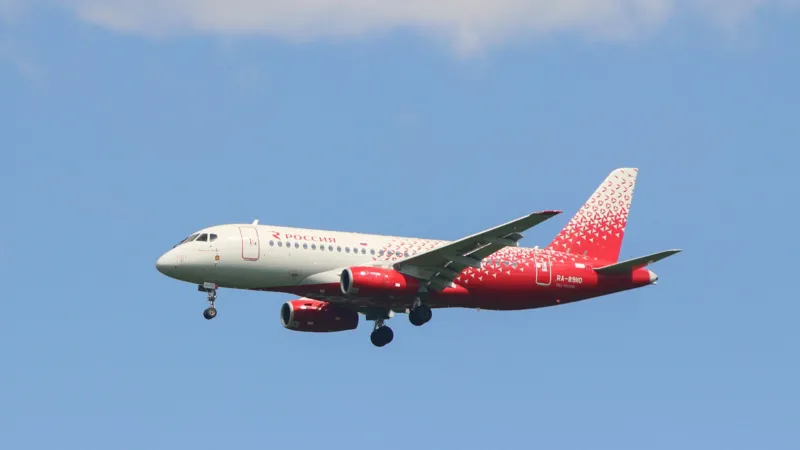
In October, India and Russia signed a deal to manufacture the SJ-100 plane in India. The SJ-100 is a twin-engine jet that can carry 103 passengers and is already used by several Russian airlines. India plans to use it on short domestic routes and calls the project a “game changer.”
Experts, however, are cautious. The project’s cost and feasibility are still unclear. UAC, the Russian manufacturer, delivered around 200 SJ-100 planes between 2008 and 2020. But production slowed after Russia’s war in Ukraine. Western sanctions cut off key parts, forcing UAC to replace about 40 systems and produce a modified version. Europe even withdrew the plane’s certification, banning it from European airspace.
India has tried building passenger planes before, with limited success. The National Aerospace Laboratories (NAL), set up in 1959, made small planes like the two-seater Hansa and five-seater trainers. Larger jets have been out of reach.
Other projects, like the 15-seater Saras and the 90-seater Regional Transport Aircraft (RTA), faced delays due to technical problems and safety concerns. The Saras MK2 prototype is still awaiting certification. Experts say India’s aviation manufacturing struggled because domestic demand was low, skilled workforce was limited, and the manufacturing ecosystem was small.
The SJ-100 deal offers a practical solution while India’s own planes are still years away. Former HAL spokesperson Gopal Sutar says it gives India experience in making aircraft and secures a reliable supply. Sanctions are a concern, but both countries likely considered them.