
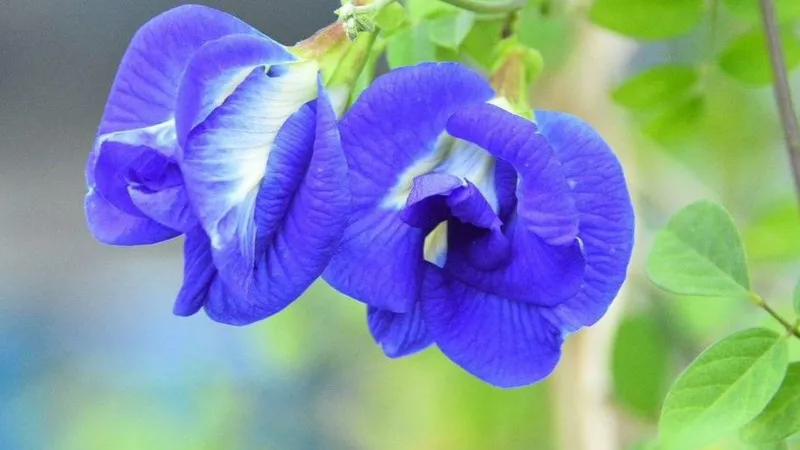
Just a few years ago, the butterfly pea flower was seen as a simple climbing plant in many Indian villages. Today, it is helping farmers earn steady income and build small businesses, especially women.
Nilam Brahma lives in Anthaigwlao village in Assam. She remembers when butterfly pea, known locally as aparajita, grew quietly along fences and homes. Things changed when she learned that women nearby were selling the flowers to make tea and natural dye.
She decided to try it herself.
Her first sale of dried flowers earned her about fifty dollars. The amount surprised her. More than the money, it gave her confidence and control over her future.
Soon after, she applied for a small loan and invested in solar dryers. These helped her dry flowers faster, keep their bright blue color, and meet buyer standards. What began as an experiment turned into a small business.
Rising Global Demand for Butterfly Pea
Countries like Thailand and Indonesia have long grown and used butterfly pea flowers. Now, global demand is growing fast.
According to Varshika Reddy, founder of THS Impex, the push comes from consumers wanting natural ingredients. Stricter rules in the US and Europe on synthetic food colors are also playing a role.
In 2021, the US FDA approved butterfly pea flower as a food additive. However, Europe remains cautious. Both the EU and UK still classify it as a novel food, meaning full approval is pending.
Even so, Indian entrepreneurs see strong potential.
Reddy explains that the flower is still treated as a backyard plant in India. There is no fixed pricing, no clear classification, and little market awareness. This makes farmers unsure about profits.
To solve this, her company works closely with farmers in Uttar Pradesh. They offer contracts, farming guidance, irrigation advice, and quality standards. Many of the growers are women.
Building an Indian Brand
Nitesh Singh, based near Delhi, was fascinated by the flower’s color change when lemon is added to its tea. In 2018, he founded Blue Tea to create an Indian brand using Indian grown flowers.
At first, it was difficult. Local flowers lacked pigment and lost color when dried. Singh began training farmers to improve quality and yield.
Today, Blue Tea works with around six hundred farmers across India. Women play a key role, especially in plucking the delicate flowers by hand.
Drying is another critical step. Temperature control matters. Too much heat destroys color and medicinal value. Farmers pre dry the flowers before final processing at Blue Tea.
Health Benefits and Farmer Impact
Early research suggests butterfly pea tea may help control blood sugar. A small human study showed positive results in people with pre diabetes, though more research is needed.
For farmers like Pushpal Biswas in West Bengal, the flower has changed everything. He shifted from rice and vegetables to butterfly pea cultivation. With better methods, his output rose and income steadily improved.
Now, more villages are joining this growing movement.