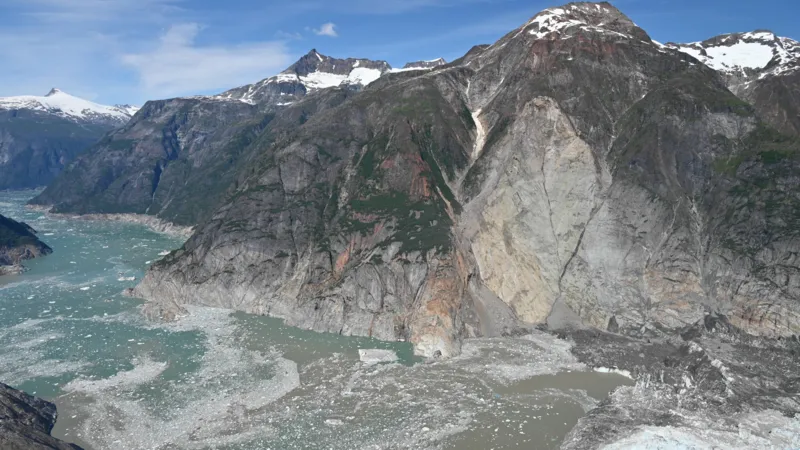
Scientists have confirmed a powerful megatsunami in Alaska that formed after a large section of mountain collapsed into the sea near South Sawyer Glacier in August 2025. The wave ranks as the second tallest ever recorded. Researchers say the event highlights growing risks linked to melting glaciers and unstable mountain slopes.
What happened in Alaska
A huge landslide sent about 64 million cubic metres of rock into a fjord in southeast Alaska. That volume equals roughly 24 Great Pyramids. The rock fell into the water in less than one minute.
The impact pushed water upward and created a massive wave. Scientists estimate the wave reached close to 500 metres in height. It formed quickly and hit a remote fjord area.
Scale of the landslide and wave
The landslide released extreme energy in a very short time. The falling rock displaced a large amount of seawater. This sudden movement triggered the megatsunami.
Researchers describe it as one of the most powerful local water events ever studied. Only one recorded megatsunami in the 1950s appears larger, reaching over 500 metres.
Impact in the fjord
The wave moved through Tracy Arm Fjord and caused major damage in a remote zone. Fortunately, no cruise ships passed through the area at that time.
Dr Bretwood Higman, an Alaskan geologist who visited the site, described the situation as a close call. He said people could have easily been in danger if they had been nearby.
Why this event matters
Scientists link this type of landslide activity to changing climate conditions. Melting glaciers can weaken surrounding rock structures. This increases the chance of sudden collapse into water.
Megatsunamis like this usually stay local. They lose energy quickly compared to ocean wide tsunamis triggered by earthquakes. However, near the source, they can be extremely destructive.
Expert warning on future risk
Experts warn that similar events could become more common in glacial regions. As ice continues to retreat, more unstable slopes may form above fjords and coastal valleys.
Researchers stress the need for monitoring high risk areas. They also highlight the importance of early warning systems in regions with cruise traffic or settlements.