
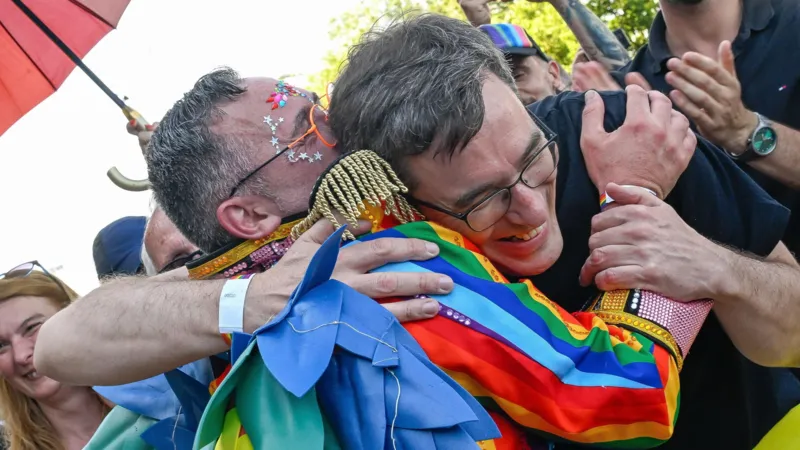
Hungarian prosecutors have dropped criminal charges against Budapest Mayor Gergely Karácsony linked to his role in the 2025 Pride march in the city.
The decision follows a major ruling from the European Court of Justice, which found Hungary’s restrictions on LGBTQ related public events conflict with EU law and principles on equality and minority rights.
What Happened at the 2025 Pride March
The Pride march took place in June 2025 in Budapest despite warnings from authorities at the time. The government under then Prime Minister Viktor Orbán had enforced a law that restricted public events linked to LGBTQ themes, citing child protection concerns.
Organisers went ahead with the event anyway. They described it as a peaceful public gathering rather than a banned protest. Reports from organisers estimated that around 200,000 people attended, making it one of the largest Pride events in the city’s history.
During the march, Mayor Karácsony publicly defended the event. He said that neither freedom nor love could be banned in Budapest.
Legal Action Against the Mayor
In January, authorities formally charged Karácsony with organising a prohibited public assembly. The case sparked political debate across Hungary and within the European Union.
However, the legal situation changed after the European Court of Justice issued its ruling in April. The court found that Hungary’s anti LGBTQ legislation violated EU standards and fundamental rights.
Following that ruling, prosecutors reviewed the case again. They later confirmed that the legal basis for the charges no longer applied.
Prosecutors Drop the Case
On Thursday, prosecutors announced that the case would not proceed. They said the EU court ruling had directly influenced their decision.
Karácsony has not issued an immediate response to the decision.
Political Context
The ruling came shortly after a major political shift in Hungary. National elections ended Viktor Orbán’s long period in power. Péter Magyar has since taken office as the new prime minister.
The case now closed, the decision marks a significant moment in the ongoing debate over civil rights, public assembly, and EU legal influence in Hungary.