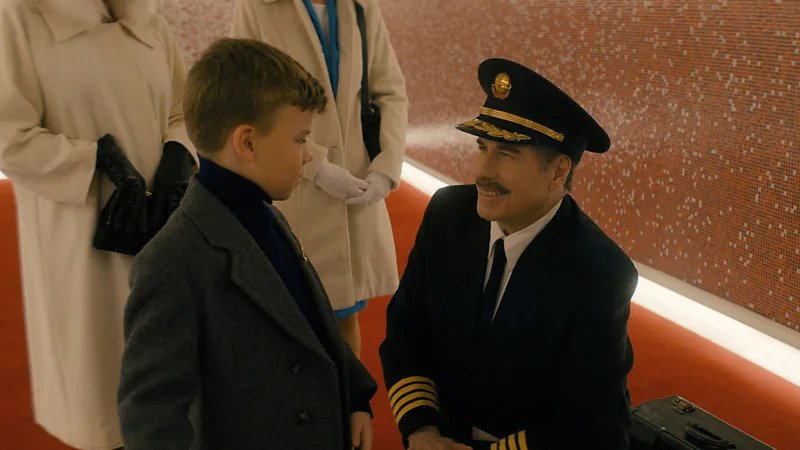
Cannes Premiere Draws Mixed Reactions
John Travolta has made his first step behind the camera with Propeller One Way Night Coach, which premiered at the Cannes Film Festival. The screening was introduced by festival director Thierry Frémaux, who noted that films made by actors often feel personal, inventive, and closely tied to cinema itself.
Despite that framing, early reactions to the film have been far from positive. One critic described it bluntly as a “disaster”, setting the tone for a divided critical response.
A Short, Personal Story Told Through Memory
The film is a deeply personal project for Travolta. It follows a young boy traveling with his mother on a domestic flight across the United States in the 1960s. The journey includes brief stops in different cities, but the narrative stays minimal and reflective rather than plot driven.
Travolta first wrote the story as a children’s book in 1997. The film version keeps that same simplicity, running for just over an hour and relying heavily on voiceover narration instead of traditional dramatic scenes.
Actor to Director Shift Raises Familiar Questions
Travolta joins a long list of actors who later stepped into directing. Some have succeeded, while others have struggled to replicate their on screen impact behind the camera.
History shows mixed results. Films by established actors often appear at major festivals like Cannes or Toronto, then fade quickly from public attention. Recent examples include Ryan Gosling’s Lost River and Chris Pine’s Poolman, both of which received weak critical responses and limited follow up projects.
At the same time, there are clear success stories. Figures such as Charlie Chaplin, Clint Eastwood, Greta Gerwig, and Jordan Peele have built strong directing careers. This contrast highlights how difficult the transition can be, even for major stars.
Festival Spotlight but Uncertain Future
Some industry observers question whether festival selection always reflects quality or simply the appeal of celebrity names. Travolta’s film, with its autobiographical tone and experimental structure, fits into a pattern of passion projects that gain festival attention but struggle to find wider audiences.
At just 61 minutes, the film feels more like a personal memory piece than a mainstream release. Its heavy use of narration and limited dramatic structure further sets it apart from conventional storytelling.