The man who studies football more than anyone
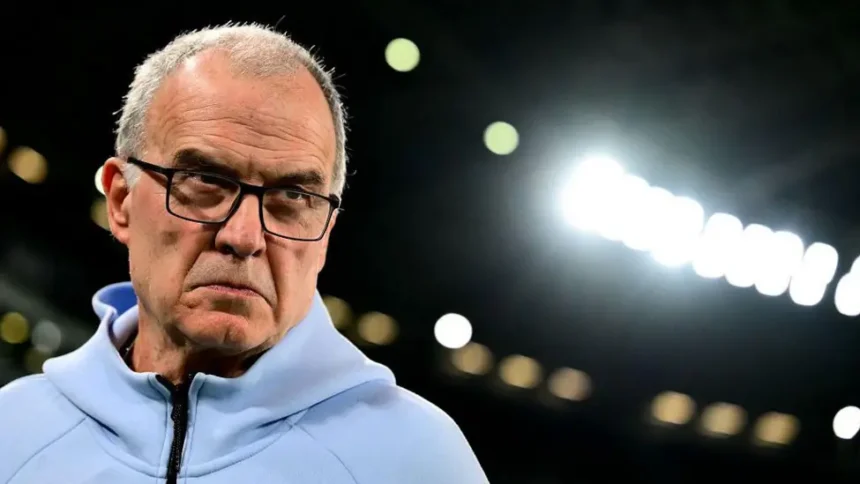
Marcelo Bielsa is widely seen as one of the most influential football coaches of the modern era. At 70, he is known for extreme attention to detail and a relentless focus on preparation. Many believe few people alive have studied as much football footage as he has.
His reputation is built on analysis, discipline, and constant work behind the scenes. Every match is treated like a long research project.
The World Cup preparation that became legend
During the 2002 World Cup, Bielsa famously travelled with around 2,000 video tapes while managing Argentina. These tapes included clips of his own players at club level, plus detailed footage of opponents his team would face.
Today, technology has replaced VHS tapes. But the scale of his preparation has not changed. For the 2026 World Cup in North America, where Uruguay will face Spain, Saudi Arabia, and Cape Verde, Bielsa is expected to arrive with an equally deep library of analysis.
A childhood built around football study
Bielsa was born in Rosario, Argentina, into a family known for academic thinking. His brother worked in politics and his sister became an architect. That analytical environment shaped his mindset early.
As a child, he preferred studying football over playing it. He regularly asked his mother to buy newspapers and magazines so he could break down tactics and team styles in detail. He spent hours reviewing how different coaches set up their teams.
Early end to playing career
Bielsa played as a defender in his youth at Newell’s Old Boys. He was technically limited and lacked pace, which restricted his progress in professional football.
By age 25, he stepped away from playing and shifted fully into coaching. That decision became the foundation of his future career.
Coaching rise and tactical identity
He began coaching at a university team in Buenos Aires before returning to Newell’s Old Boys as a reserve coach. His methods quickly stood out due to their intensity and repetition based training style.
In 1990, he became manager of Newell’s and led them to a league title. His approach focused on drilling systems into players so they could perform consistently, even without natural flair.
He later coached in Mexico, then returned to Argentina with Velez Sarsfield. There, he was nicknamed “El Loco” for his unusual decisions, including playing two teenage centre backs together. Despite criticism, he led the team to another league title.
International management and reputation
Bielsa briefly managed Espanyol in Spain before taking charge of Argentina in 1998. His coaching style gained global attention for its intensity, structure, and obsessive preparation.
Even now, his methods continue to influence players and coaches around the world.