
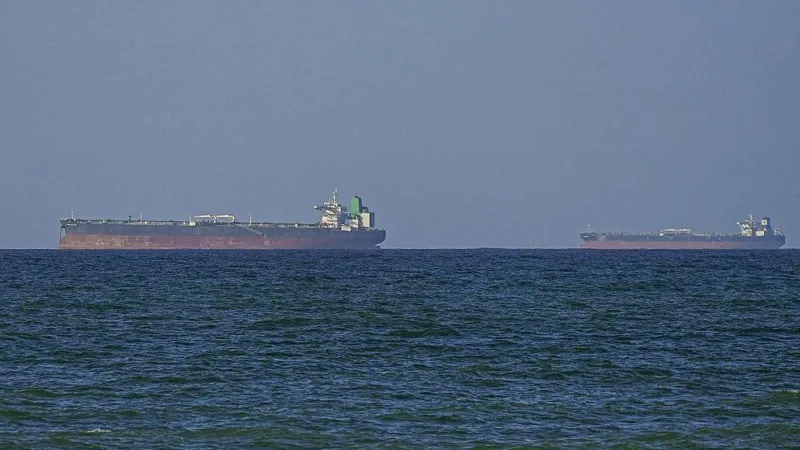
The global oil market reacts to increasing tensions
After diplomatic talks broke down between Iran and the United States, oil prices rose sharply Monday. They returned to above $100 per barrel. Fears of a global disruption to energy supplies grew after the sudden collapse in diplomatic talks.
Brent crude increased to 102.02 US dollars per barrel. This is equivalent to 75.91 British pound. West Texas Intermediate crude rose strongly as well, rising to 103.78 dollar per barrel.
This jump came after a temporary period of relief, when the prices fell below $100 dollars last week following a ceasefire agreement that lasted only a few days. This agreement raised the hopes for improved trade through important shipping routes.
Strait of Hormuz is a major point of pressure
The Strait of Hormuz is one of the major energy routes of the world. This waterway is responsible for around one-fifth of all global gas and oil shipments.
Shipping activity is down sharply after a renewed conflict. After the military conflict between Israel, Iran, and the United States earlier in this year, disruptions began.
China has called for restraint and stressed that the Strait of Hormuz plays a vital role in global energy security, trade stability, and international commerce.
Global supply concerns raised by shipping disruption
Iran exports oil despite tensions. Data from maritime tracking suggests that over 58,000,000 barrels of crude have left Kharg Island in the last few months. The majority of these shipments was directed towards China.
Traders are cautious due to the uncertainty surrounding future shipping conditions. Analysts claim that markets react more to current expectations than actual supply levels.
Some experts believe that prices could rise further if restrictions tighten or if diplomatic talks fail to restart.
Economic impact extends far beyond fuel
Strait of Hormuz not only plays a key role in oil and gas. The Strait of Hormuz is also important in the global supply chain for industrial materials.
Around 30 percent of the global aluminium and Helium shipment passes through this route, according to experts. The route also deals with large quantities of polymer and fertilizer materials.
Fuel prices could rise if disruptions last for several weeks. Globally, higher production costs may affect the manufacturing and agricultural sectors.
Uncertainty affects the financial markets
The global stock market reacted negatively as tensions grew. The FTSE 100 and CAC closed in the negative zone.
Japan and South Korea also saw a decline in their markets. Due to the heavy dependence of Middle Eastern energy imports, investors in this region are especially sensitive to changes in oil prices.
Major stock indexes in the United States opened lower, as traders watched developments regarding maritime restrictions and a possible escalated situation.
The market outlook is uncertain
Analysts believe that the future direction of oil price depends now on three major factors. The three factors are whether or not the navy restrictions will be fully implemented, if shipping disruptions increase, and if diplomatic negotiations resume.
Some analysts believe that prices may remain high as long as uncertainty persists. Some experts believe that any signs of renewed dialog could stabilize the markets quickly.