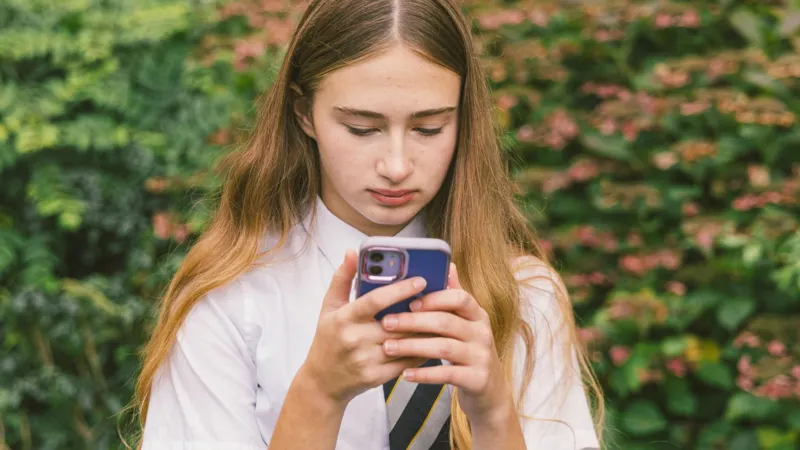
School leaders and campaigners are asking the government to explain how its planned smartphone ban in schools will work in practice. They say clearer rules are needed so teachers can apply the policy with confidence.
The proposal comes through changes to the Children’s Wellbeing and Schools Bill. The government wants schools to treat official guidance as a legal duty. This guidance recommends that schools should be mobile phone free by default.
Debate Over How the Ban Should Work
During a session in Parliament, Early Education Minister Olivia Bailey said current measures are enough to enforce strong restrictions on phone use in schools. She argued that the system already supports effective bans.
However, Shadow Education Secretary Laura Trott agreed with the idea of a ban but questioned how it would be applied. She raised concerns about “not seen, not heard” policies. According to her, such approaches often fail to stop distractions in classrooms.
Schools Already Testing Strict Policies
Some schools have already introduced their own rules. Rob McGinty, headteacher of Hollingworth Academy in Rochdale, said his school follows a “no see, no hear” policy. Even so, he believes a full ban could work better.
He explained that students still bring phones to school. Devices often vibrate or send alerts, which distract students during lessons. This reduces their focus and affects learning.
To deal with this, the school is considering lockable pouches. These pouches block signals, so phones cannot receive notifications. This may help students stay focused throughout the day.
Challenges in Enforcing a Ban
McGinty pointed out a key issue. Even with strict rules, phones can still be hidden in bags or pockets. Notifications can still tempt students to check their devices. He said schools need clearer guidance to manage these situations properly.
Delays in Final Decision
The legislation is still being debated between the House of Commons and the House of Lords. This process is often called parliamentary “ping pong.” It continues until both sides agree on the final version.
Time is becoming a concern for the government. The bill includes other important measures, such as tracking children who are not in school and assigning unique ID numbers to students. These changes may be delayed if the bill is not approved soon.