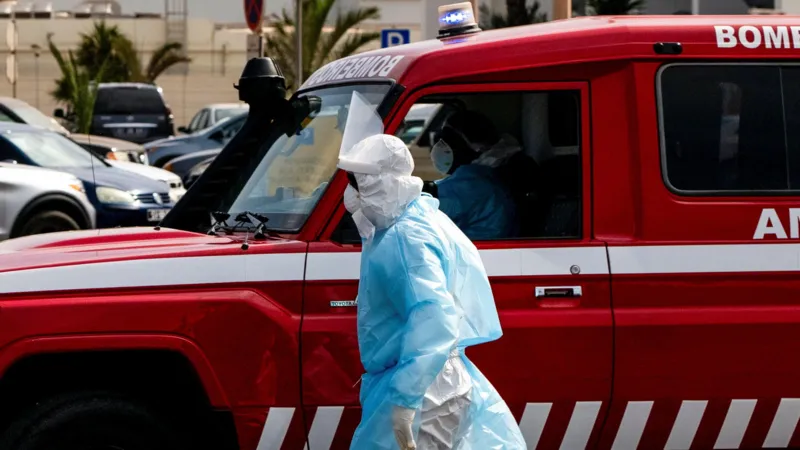
Outbreak situation on the cruise ship
Health authorities are investigating a hantavirus outbreak linked to a cruise ship that traveled from Argentina. The situation is being treated as serious because several passengers became infected during the voyage.
Three passengers have died during or after the journey. Three others were removed from the ship for medical care. In total, at least eight cases have been reported among people who were on board.
The cruise operator confirmed that passengers from several countries have already returned home, including the United Kingdom, South Africa, the Netherlands, the United States, and Switzerland. This has triggered a large contact tracing effort across multiple health systems.
Why contact tracing is important
Health teams are tracking everyone who may have been exposed. Officials say this process is complex because passengers dispersed to many countries after leaving the ship.
In the United Kingdom, two passengers who disembarked earlier are now voluntarily staying at home after being informed about possible exposure. They currently have no symptoms.
In the United States, health departments are monitoring several returned passengers. None of them show signs of illness at this time.
Experts say this monitoring is essential because early detection helps prevent further spread.
How hantavirus spreads
Hantavirus usually spreads from rodents. People can become infected when they breathe air contaminated with particles from rodent urine, droppings, or saliva.
The specific strain involved in this outbreak is known as the Andes strain. In rare cases, this strain can spread between people through very close contact.
However, health organizations explain that this is not an easy virus to catch. It does not spread in the same way as flu or coronavirus. It requires close and prolonged contact, which limits wider transmission.
Why the risk to the public is still low
Health experts say the overall risk to the general public remains low. Even though the situation is being carefully managed, the virus does not spread easily in everyday settings.
Cruise ships can increase risk because people share cabins, dining spaces, and enclosed areas. This makes close contact more likely compared to normal travel environments.
Investigators are also considering whether exposure happened before boarding the ship or during visits to remote wildlife areas where rodents may have been present.
What scientists are still trying to understand
Officials are still working to confirm how the outbreak began. They are also studying whether transmission happened from animals to humans, or between people on board.
Early findings suggest both possibilities may have played a role. The presence of the Andes strain supports the idea that limited human to human transmission may have occurred in very close settings.