A serious incident in Odisha, India has triggered public anger and debate over banking rules and human dignity.
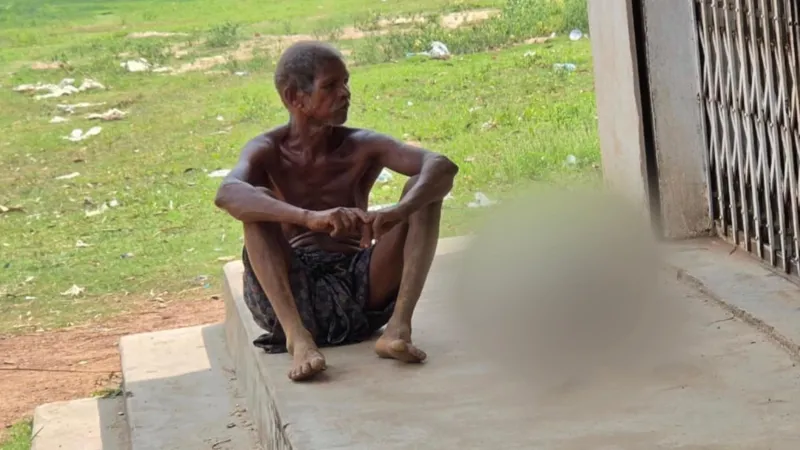
A 52 year old man from Keonjhar district said he struggled for months to withdraw his late sister’s savings. The bank repeatedly asked him to submit official proof of death before releasing the money.
Frustrated by repeated rejection, he carried his sister’s skeletal remains to the bank to support his claim. Police later confirmed that he had exhumed the remains before taking them to the branch.
The video of the incident quickly spread on social media and caused widespread criticism of both the banking system and local administration.
Background of the Case
The man’s sister, a 56 year old daily wage worker, passed away earlier this year. She had previously returned to her maternal home after the deaths of her husband and son.
Before her death, she sold livestock and deposited around 19,300 rupees in a bank account.
After her passing, the man attempted multiple times to withdraw the money but faced repeated delays due to missing official documentation.
Bank Response and Clarification
The bank has denied asking for any unusual or inappropriate proof. Officials stated that they only requested legally required documents to process the claim.
According to the bank, the incident appears to have resulted from misunderstanding of procedures rather than any direct instruction from staff.
The bank also confirmed that the funds have now been released to the rightful legal heirs.
Government and Administrative Action
Local authorities have taken notice of the incident. The Revenue Minister stated that the matter is under investigation and action may be taken against the branch manager if misconduct is proven.
The district administration also expressed concern and emphasized that protecting citizens dignity and rights remains a priority.
Public Reaction
The incident has sparked strong reactions across India. Many people criticized the system for being too rigid and insensitive toward vulnerable families, especially in rural areas.
Others pointed out the need for better awareness about legal procedures so families can avoid such distressing situations.