Tensions rose in eastern Democratic Republic of the Congo after police fired warning shots into the air to break up angry crowds outside an Ebola treatment centre in Mongwalu. Families reportedly tried to take back the bodies of relatives who had died from the deadly virus.
Health officials said the unrest continued for several hours on Sunday. The treatment centre had already faced an overnight attack earlier in the weekend when unknown people set fire to an isolation tent inside the hospital compound.
Families Demand Bodies of Victims
According to hospital officials, several people gathered outside the medical facility demanding that authorities release the bodies of two Ebola victims to their families for burial. One of the victims was reportedly a respected Catholic religious leader known in the local community.
Doctors warned that Ebola victims remain highly infectious after death. Traditional funeral practices and direct contact with bodies can quickly spread the virus to more people.
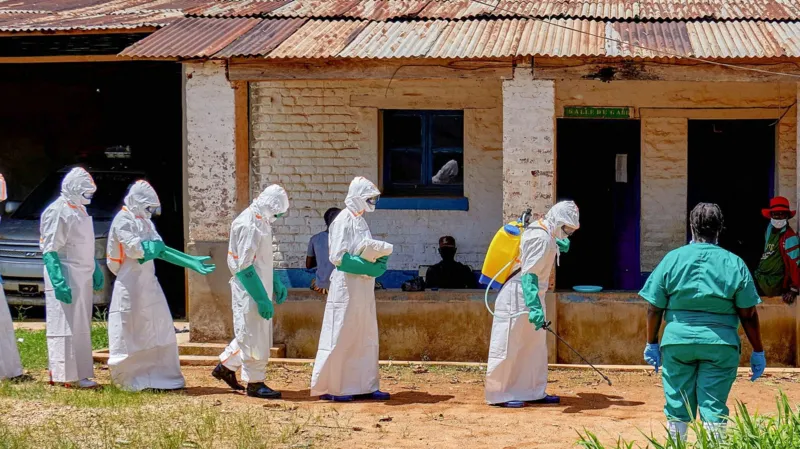
Medical teams and Red Cross workers have been carrying out controlled burials under police protection to reduce the risk of further infections.
Fear and Distrust Fuel Public Anger
Many communities affected by the outbreak continue to distrust health authorities. Some residents question the real cause of deaths and remain skeptical about Ebola treatment measures.
Earlier in the week, another violent incident took place in Rwampara, a town located southeast of Mongwalu. Protesters burned isolation tents after officials stopped them from removing the body of a suspected Ebola victim for a traditional burial ceremony.
Health experts believe misinformation and fear are making it harder to control the outbreak.
Ebola Cases Continue to Rise
Officials say the current Ebola outbreak has now recorded more than 900 suspected cases and around 220 suspected deaths. The situation has raised concern across Central and East Africa.
Red Cross officials also confirmed that three volunteers involved in handling dead bodies died from suspected Ebola infections. Their deaths highlight the dangers faced by frontline workers during the outbreak.
Meanwhile, health ministers from Uganda, South Sudan, and the Africa Centres for Disease Control and Prevention recently agreed to strengthen cross border cooperation to help stop the virus from spreading into neighboring countries.
Why Safe Burials Matter During Ebola Outbreaks
Health experts say safe burials remain one of the most important steps in controlling Ebola outbreaks. The virus can survive in the bodies of victims after death, making funeral gatherings extremely risky.
Authorities continue to urge families to cooperate with medical teams to protect communities and prevent more infections.