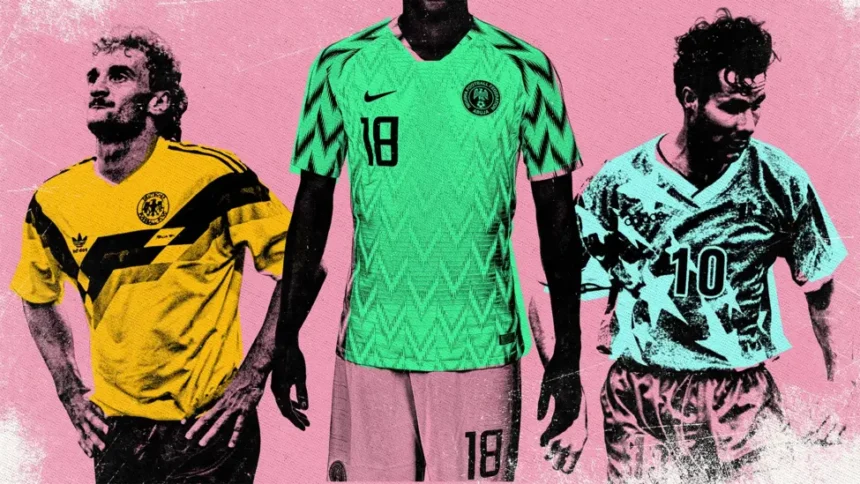
Why World Cup shirts become unforgettable
Some football shirts stay in memory long after the final whistle. They are tied to moments, emotions, and generations of fans who grew up watching the World Cup unfold every four years.
For many people, World Cup tournaments act like milestones in life. Each edition marks a new stage, from childhood excitement to adult perspective, with the jerseys becoming part of that personal timeline.
Childhood memories shape what feels iconic
Kit designer Matthew Wolff, known for creating Nigeria’s 2018 World Cup kit and working with France, says the strongest football shirt memories often come from childhood.
He recalls the 1990s and early 2000s as a defining era. Shirts from Mexico 1998, USA 1994, Germany in the early 1990s, Japan 1998, and Nike designs from 2002 stand out for him. Even Cameroon’s sleeveless kit from 2002 remains memorable.
According to Wolff, these shirts feel powerful because young fans saw players as larger than life. The designs looked bold, almost like superhero costumes, which made them unforgettable.
A shirt becomes iconic through moments
Wolff explains that a football shirt is not just about design. Its legacy grows through what happens on the pitch while it is worn.
Big tournaments, historic wins, and emotional matches all shape how fans remember a kit. Over time, these memories give shirts a cultural value that goes beyond sport.
As years pass, even simple designs can gain iconic status because they are linked to unforgettable football stories.
Why modern kits struggle to stand out
Wolff also believes it is harder for modern shirts to achieve the same legendary status.
Today’s football market is crowded. There are more national teams, more club kits, and faster design cycles than ever before. This constant flow makes it difficult for any single shirt to dominate global attention.
He also raises a concern about balance. While modern kits often celebrate culture and identity, the rapid production cycle can blur the line between creative expression and commercial demand.
Culture, design, and fast consumption
Football shirts today often reflect national identity and cultural themes more directly than before. However, Wolff suggests that the speed of releases can reduce their long term impact.
When kits change too often, fans have less time to connect emotionally with a single design. This makes it harder for modern shirts to reach the same lasting iconic status as earlier generations.