
Summer homes feel most special when they connect deeply with their surroundings. Across the world, architects now design retreats that blend into forests, coastlines, and mountains instead of overpowering them. These homes use natural materials, smart layouts, and climate aware designs to create peaceful living spaces shaped by nature.
Below are two remarkable examples that show how architecture and environment can work together in perfect balance.
Rainforest Living in Costa Rica
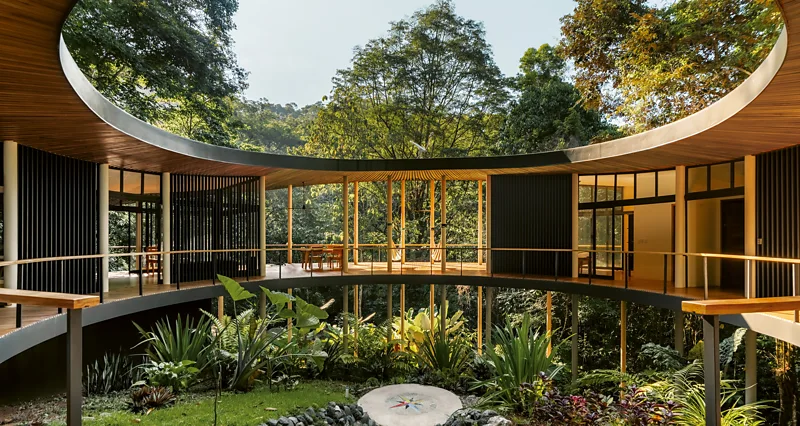
In the Osa Peninsula, a heavily forested region in southwestern Costa Rica, Sinfonia Verde stands as a striking example of nature inspired design. The home sits within dense rainforest and offers a full 360 degree view of the green canopy.
Architect Benjamin Saxe designed the house as an immersive space where residents can live closely with wildlife and vegetation. The structure follows the slope of the land and rises above the ground in key areas to let air, water, and animals move freely underneath.
A curved roof helps manage heavy tropical rainfall. The design also supports natural airflow and reduces impact on the surrounding ecosystem. The result is a home that feels like part of the rainforest instead of a separate structure placed inside it.
This approach allows residents to experience daily life surrounded by birds, trees, and shifting light, while still enjoying comfort and privacy.
Historic Retreat in Santorini, Greece
On the island of Santorini in Greece, Mesaria Canava shows how history and modern living can come together. The home was originally a 200 year old underground wine cellar used for agricultural storage and production.
Today, architects at Kapsimalis Architects have transformed it into a calm summer residence while preserving its original structure. Vaulted interiors, underground cisterns, and old storage areas have been carefully reused instead of removed.
The rooftop terrace features a striking pool with wide views over the island and the Aegean Sea. Thick whitewashed walls keep the interiors cool during hot summer months, while open plan living areas create a simple and airy atmosphere.
This home respects its past while offering a modern lifestyle shaped by light, space, and sea views.
Why These Homes Work So Well
These summer homes succeed because they respond directly to their environment. They use natural shapes, local materials, and climate smart design choices. Instead of forcing a style onto the landscape, they adapt to it.
This creates homes that feel peaceful, grounded, and connected to nature.