
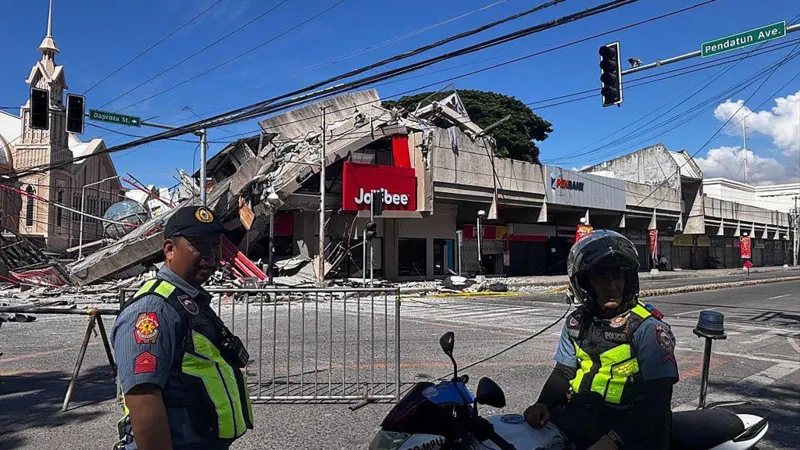
A powerful 7.8 magnitude earthquake struck the southern Philippines on Monday, leaving widespread destruction across Mindanao Island. Authorities have confirmed at least 37 deaths and 487 injuries, but officials fear the number could increase as emergency crews reach more affected areas.
Hundreds of aftershocks continue to shake the region, creating additional challenges for rescue teams and residents. Many communities remain without electricity and communication services, making relief efforts more difficult.
Extensive Damage Reported Across Mindanao
The earthquake caused severe damage to homes, schools, roads, and public infrastructure. Several buildings collapsed during the strong shaking, while landslides blocked major roads and isolated some communities.
Disaster management officials estimate that nearly 2,000 homes have suffered damage. In addition, around 6,000 public schools were affected by the disaster.
Search and rescue teams continue to work in heavily damaged areas. Authorities remain focused on finding survivors and providing assistance to affected families.
Tsunami Warnings Trigger Mass Evacuations
The powerful quake also triggered tsunami warnings in several countries. Coastal residents in parts of Indonesia and along Japan’s Pacific coastline evacuated as a precaution.
Although major tsunami damage was avoided, the warnings forced tens of thousands of people to move to safer locations.
Why the Philippines Faces Frequent Earthquakes
The Philippines experiences frequent earthquakes and volcanic activity because it sits along the Pacific Ring of Fire. This region contains several active fault lines and tectonic plate boundaries.
Experts say Monday’s earthquake originated from movement along the Cotabato Trench, located off the southern coast of the country.
The same trench produced a devastating 7.9 magnitude earthquake in 1976. That disaster triggered a deadly tsunami that claimed approximately 5,000 lives.
Residents Describe Terrifying Moments
Many residents described scenes of panic as the earthquake struck without warning.
Construction worker Ramel Pato was dropping his three children at school in Polomolok when the ground suddenly began to shake.
According to Pato, children immediately started running and crying as classrooms and buildings trembled around them. Having experienced a previous earthquake in 1998, he stayed calm and focused on keeping his family safe.
Teacher Cesar Sundo from Lebak town said the shaking felt as though someone was forcefully rocking a hammock for more than two minutes. He noted that the tremors appeared to grow stronger with each passing second.
Videos captured by residents showed buildings collapsing, people rushing to safety, and frightened schoolchildren seeking shelter.
Rescue Operations Continue
Emergency responders remain on high alert as aftershocks continue across Mindanao. Officials are assessing damage, restoring essential services, and supporting affected communities.
Authorities warn that casualty figures may rise as teams gain access to remote and heavily damaged locations. Rescue operations remain the government’s top priority as the region begins the long process of recovery.